
Driven to Save Hundreds of Lives
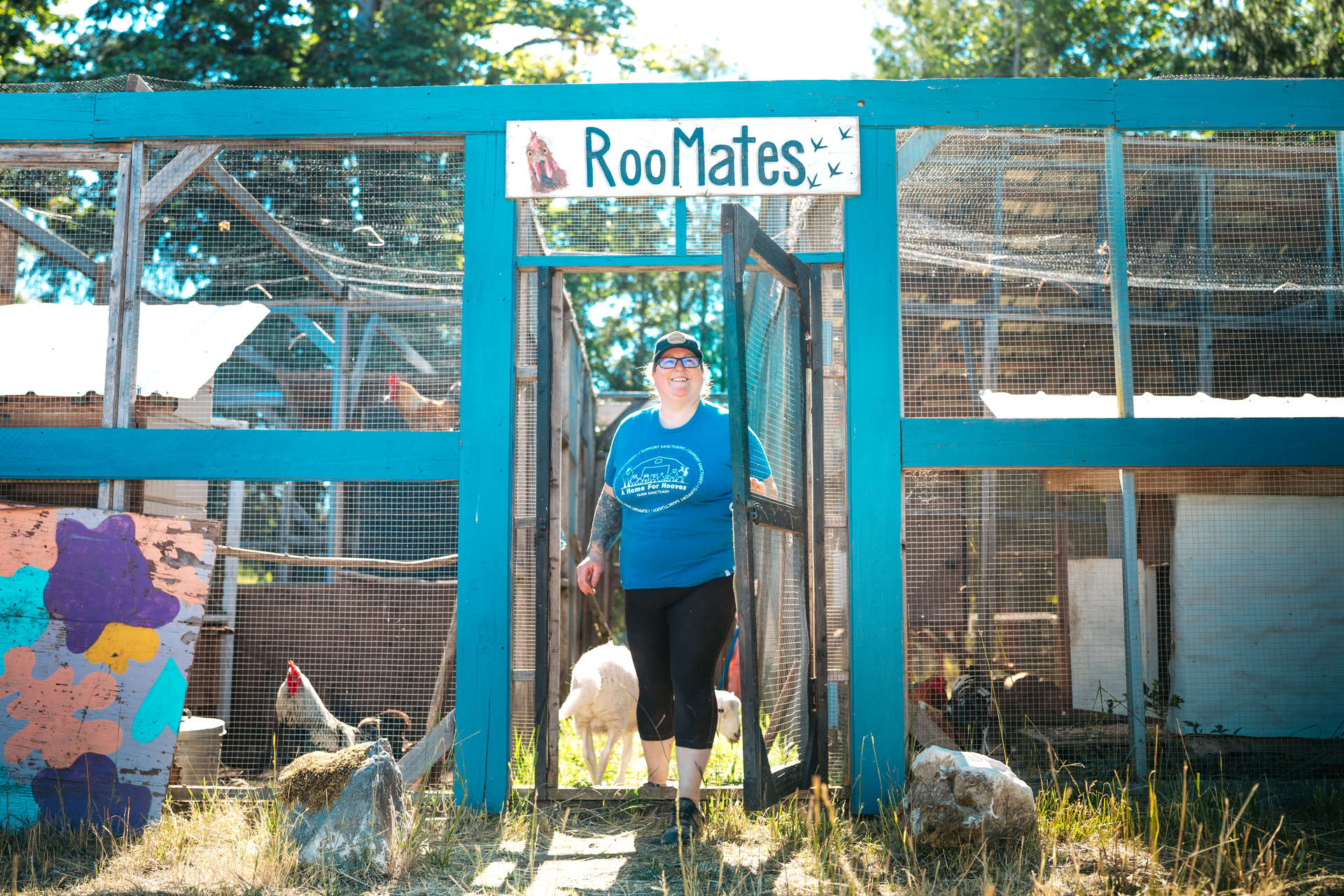
Sometimes, a single decision changes everything. For Michelle Singleton of Duncan, BC, that decision was volunteering at a farm animal sanctuary in 2017. What began as a simple desire to help eventually became her life’s work, leading to the creation of one of the most well-known sanctuaries for rescued farm animals not only on Vancouver Island, but across Canada. It all started while she was spending her time at the RASTA Animal Sanctuary in Chemainus.
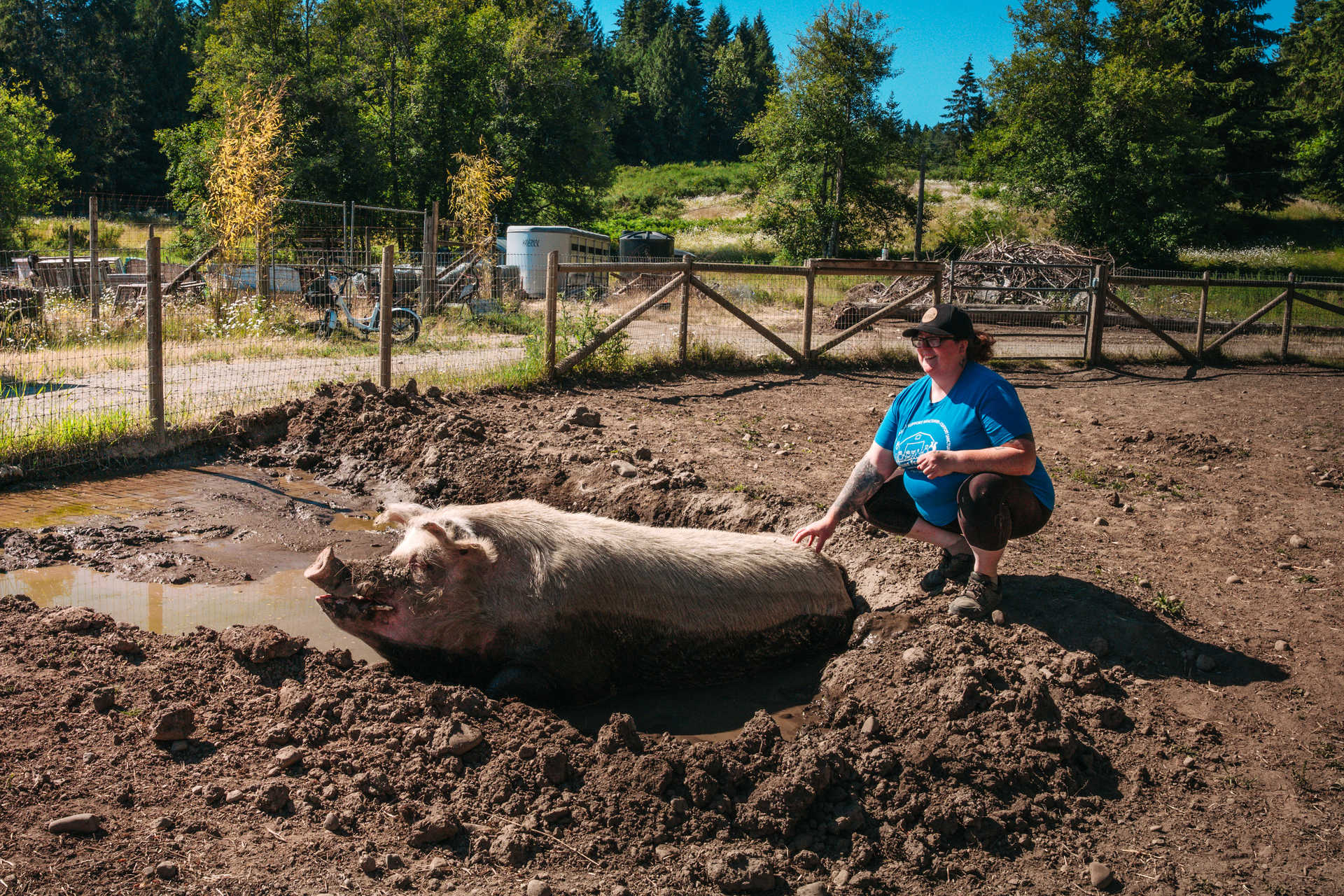
"It started in my backyard. My husband and I owned a four-and-a-half-acre property in Sahtlam. We started with six animals. At the time, we had four pot-bellied pigs, a thousand-pound sow — which is just a big female pig—and a cat. Basically, we started the sanctuary initially because I adopted a couple of pot-bellied pigs and got involved with the sanctuary to volunteer just to learn more about them, because I didn't know a lot about pot-bellied pigs and their general care.
Two months into volunteering there, I unexpectedly lost my father to a heart attack. It was one of those things that made me re-evaluate what I was doing with my life and how I could make a difference. At that time, I was working for Island Health, just doing the everyday thing.
Around November 2017, there was a thousand-pound (450 kg) sow named Debbie who needed a safe place to go because she could no longer be used for breeding, and the farmer's wife really loved her. They didn't want her to go for slaughter, so they asked us to take her. I ended up taking her, and that is how we started the sanctuary."
Recognition and the Ultimate Test: How to Rescue 100 Animals in 3 Weeks
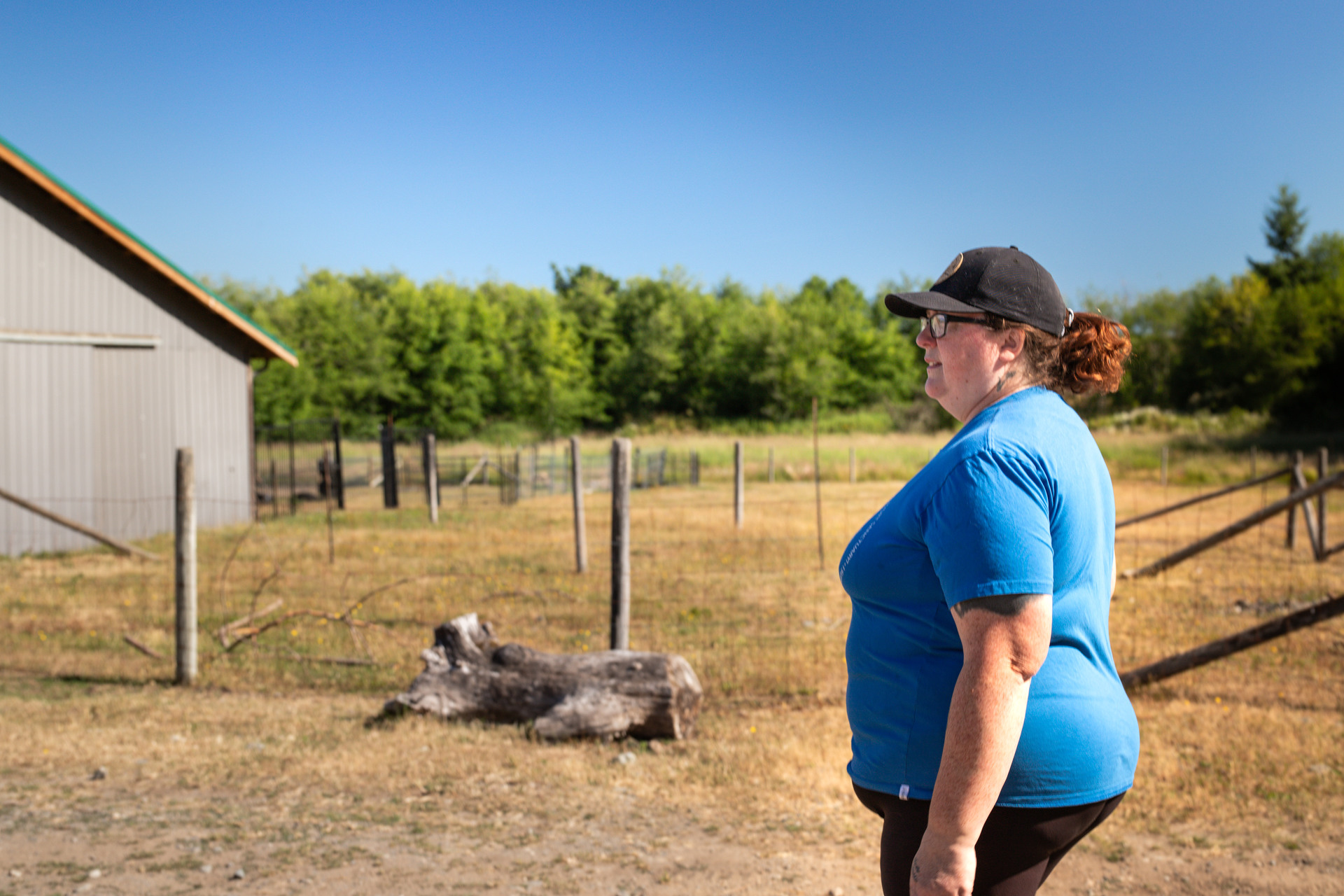
That's how Michelle Singleton became the founder and executive director of A Home for Hooves Farm Sanctuary in Duncan. One of her main sources of inspiration was the experience of Lucie Cerny, the founder of RASTA Animal Sanctuary. By 2018, the newly established sanctuary was already home to 21 rescued animals.
"We operated as a non-profit for two years and obtained our registered charity status about three years after that."
In November 2020, A Home for Hooves became the first farm animal sanctuary in Canada to be accredited by the Global Federation of Animal Sanctuaries (GFAS) — the organization that sets international standards for animal care. In announcing the accreditation, federation officials specifically commended Michelle and her team for their high standard of care, safe living conditions, and responsible organizational management. This was an international recognition of the entire volunteer team's hard work, as well as a major personal milestone for Michelle. Reaching this point took immense effort, but it wasn't even half the story.
"Four years into it, in 2021, the sanctuary I had originally been volunteering at shut down, and they had 100 animals that needed somewhere to go. So, we took in those 100 animals. The majority of them came to my house, which meant there were a lot of animals on a four-acre property, and we also utilized fostering. We had about six different foster homes. That was a huge challenge because we went from 60 animals to 160 within three weeks.
We had foster homes throughout the island, from Cedar all the way down to Sidney. It was a massive number of new animals to manage, learn about, and care for, alongside coordinating the foster homes across the island. Moving hay was a bit of a nightmare because we had our cows, donkeys, and mini horses in foster care. Transporting large amounts of hay all over the island was very time-consuming.
At that time, I also recognized that a lot of sanctuaries had been shutting down in BC because they were started on the founder's personal land. When the founder can no longer manage it, the animals have nowhere to go. So, we launched a capital campaign to purchase a large acreage. We had been looking for a suitable property on Vancouver Island, which wasn't easy — trying to find something that would meet our needs and already had fencing and outbuildings. We hadn't really found anywhere."
Nothing Is Accidental: How Cyrus the Boar Showed the Way
This led to the development of a strategic growth plan: the "A Forever Home for Hooves" project. The goal was to purchase a large parcel of land owned directly by the charity itself, ensuring the sanctuary’s permanent existence regardless of individual circumstances. The plan required raising between $2 million and $3 million to build a fully functioning infrastructure for animal care. Building a stable charity capable of lasting for decades and securing the long-term future of these animals became Michelle’s biggest challenge.
"About a year into running the capital campaign, I was involved with an SPCA seizure. There was an 800-pound boar whom someone had tried to stab to death. We took him into our care, but I couldn't keep him at my place because I didn't have enough room. I also had intact females, and he was an intact boar, so I couldn't have him on my property.
There was a wildlife vet who was initially called to assess and euthanize him, but he didn't know how to euthanize a pig because it's a difficult procedure and wildlife vets lack that specific experience. By the time they got a farm vet out there, Cyrus had healed well enough that they decided he didn't require euthanasia. I couldn't find an appropriate foster home for him either, but that wildlife vet happened to know someone living nearby. He asked her to take him, and she agreed, so we transported him to that foster home.
Because I was driving down this road frequently to see Cyrus, I noticed that a certain property was vacant. It didn't look like there were any animals on it, and it wasn't listed for sale. I decided to send the owners a letter asking if they would consider selling it to us. They looked up our capital campaign on our website and saw exactly what we were looking for. I had basically described their property perfectly; the only exception was that I wanted 50 acres and this was 40. Initially, they had no intention of selling.
However, because the property had been in their family for a very long time, they liked the idea of it going to a rescue organization. They thought it would be a meaningful legacy. I met with them; they are lovely people and loved our vision. They gave me a year to fundraise, and we managed to raise $2.35 million for the down payment. It was a massive challenge trying to raise that amount of money."
A Permanent Home for the Hoof Crew: A New Beginning
After two and a half years of fundraising and hard work, the dream came true on February 15, 2024, when the organization received official mortgage approval through Island Savings. Thanks to the incredible support of the community, followers, donors, and foundations, they secured a $2.35 million down payment. On April 30, 2024, the organization officially took ownership of its new property — a 40-acre farm on the outskirts of Duncan. The new property, complete with pastures, woodlands, creeks, and outbuildings, became a permanent home for the sanctuary’s residents and opened up new possibilities for expanding their rescue efforts.
"We received a lot of support from the community, and we happened to find a couple of foundations that are very supportive of our cause — one in particular. They wish to remain anonymous, so I cannot share who they are, but they truly championed this initiative. Without them, this probably wouldn't have happened because they provided significant funding and support over the years.
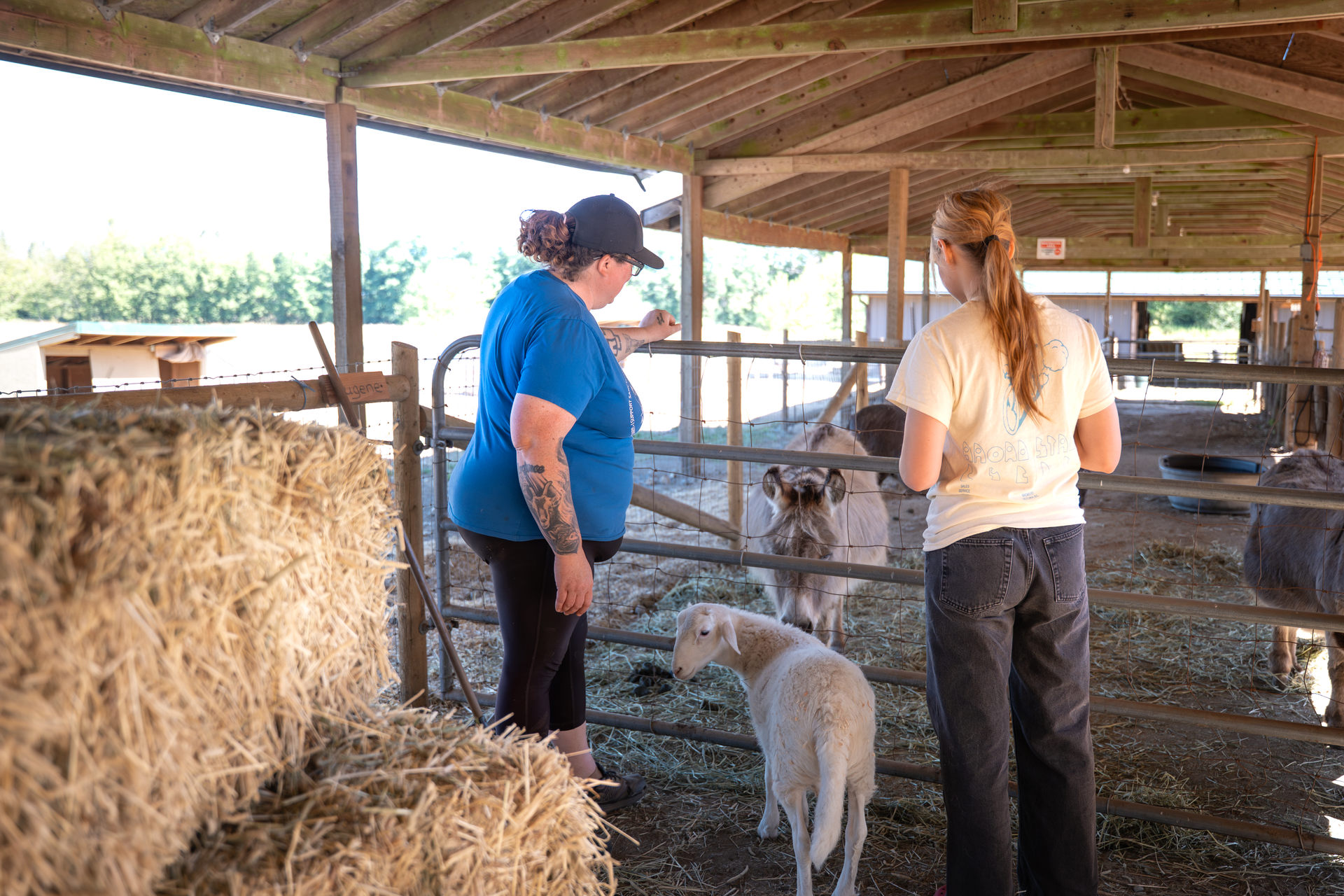
So, we purchased this place. There is still a ton of work to do; we had to put new roofs on the barns, and we are working on the fencing. We have already installed a completely new perimeter fence. There are still many ongoing projects and fences to replace, which you will see when we go over to the bird barn. Currently, we provide a forever home for all the animals in our care, with 230 residents living here at the moment. It is a large number of animals to look after."
One of a Kind: A Farm Sanctuary Powered by Volunteers
Today, the organization provides a forever home to animals that have been abandoned, seized due to neglect, or surrendered by owners facing difficult life circumstances. Over the years, the sanctuary has welcomed hundreds of residents, including pigs, goats, sheep, cows, donkeys, ponies, chickens, ducks, geese, turkeys, and many others. A Home for Hooves is the only farm sanctuary on Vancouver Island and the first accredited one in Canada. The organization’s work is the result of years of dedication by people who have consistently expanded the space and resources available to the animals.
"We have two full-time employees and one seasonal full-time employee. We also have about 40 to 50 volunteers who come out to help us. We run volunteer shifts every day of the week. Most people come every second week, while some come every week. We just ask that volunteers commit to coming at least once every two weeks to keep their skills sharp and stay updated on operations. Our volunteers truly keep this place running."
The Cost of Compassion: A Daily Routine That Costs a Small Fortune
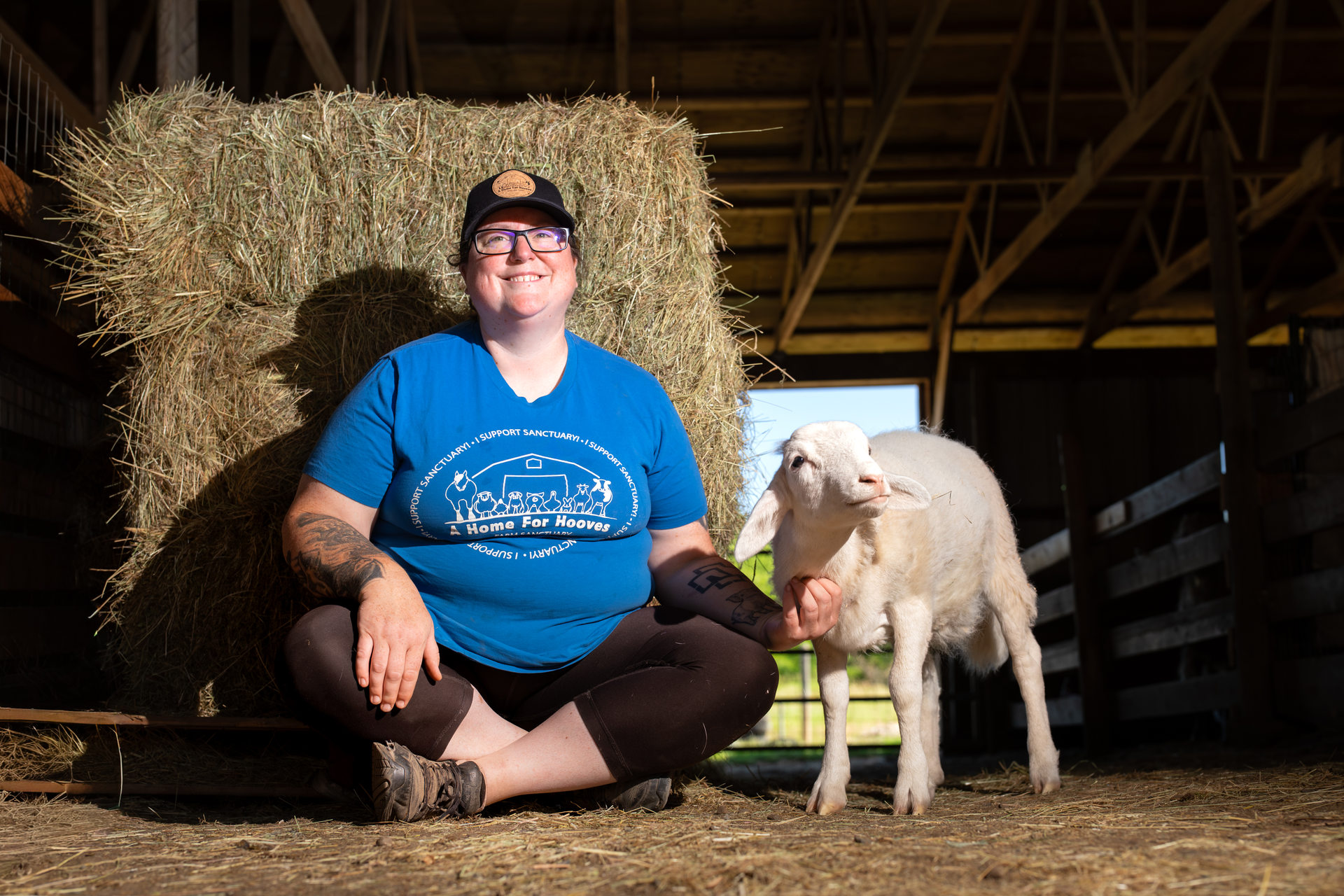
Michelle places a strong emphasis on public education. She firmly believes that introducing people to animals and helping them understand their needs fosters a more compassionate society, changing lives on both sides. That is why the sanctuary regularly hosts guided tours and educational events. This gives visitors the chance to experience farm animals not as abstract concepts, but as unique individuals — each with their own personality, emotions, and story.
"It costs about twenty thousand dollars a month to run this operation. It is very expensive, and the majority of that is covered by our monthly donors. We have supporters who sponsor the animals, usually contributing about $20 or $30 a month. When you have a large volume of people doing that, it creates a sustainable income. That is what truly supports us. We also host various fundraisers. Sponsors get to feel a personal connection to their animal — they receive a calendar and a photo, and they can come out to meet them.
The morning feed takes about two hours to complete if you do it on your own, and the same goes for the evening shutdown — about two to two and a half hours. During those times, we are also doing head counts, ensuring everyone is eating properly, and checking their overall health. There are numerous medications to administer and specific morning routines for animals moving to different areas."
The Weight of the Decision: Who to Save
While an extraordinary amount has been achieved, there is still plenty of work ahead: ongoing land maintenance, infrastructure upgrades, prepping areas for current and future residents, and paying off the mortgage are all on the sanctuary’s daily agenda.
"Another challenge for us is the sheer volume of intake requests. Every couple of days, I am asked to take in an animal. We are pretty much at capacity at the moment due to the workload. We still have some physical space, but caring for 230 animals is demanding. Many of the animals arriving now require extensive medical attention.
Any new arrival goes directly into quarantine. This step is critical because, depending on the species, we perform blood work and various diagnostic tests to ensure they are healthy. We also have a veterinarian on-site every week who conducts formal assessments before any animal joins the main herd.
If an animal has a history of abuse or neglect, we often keep them in quarantine a bit longer. In those cases, I usually work with the animal one-on-one until they grow accustomed to me and feel secure, allowing us to build a foundation of trust. If an animal arrives suffering from starvation or a serious medical injury, we work very closely with our veterinarian, which requires a tremendous amount of effort.
Managing constant intake requests can be emotionally and operationally difficult, so we have established a robust screening process. When an initial request comes in, I first assess whether we are capable of taking the animal. If I believe we should, I discuss it with my two permanent employees to ensure they are on board. If we agree, I complete a 27-point questionnaire regarding the quality of care: Can we look after them properly? Do we have the physical space? Do we have the financial resources? Once answered, I submit the questionnaire to our seven-person board of directors for final approval or denial.
This system is beneficial because the responsibility of turning an animal away or accepting it does not rest entirely on my shoulders. Having a rigorous process prevents us from falling into a hoarding situation. If you take in too many animals, you cannot care for them properly, which creates a severe issue.
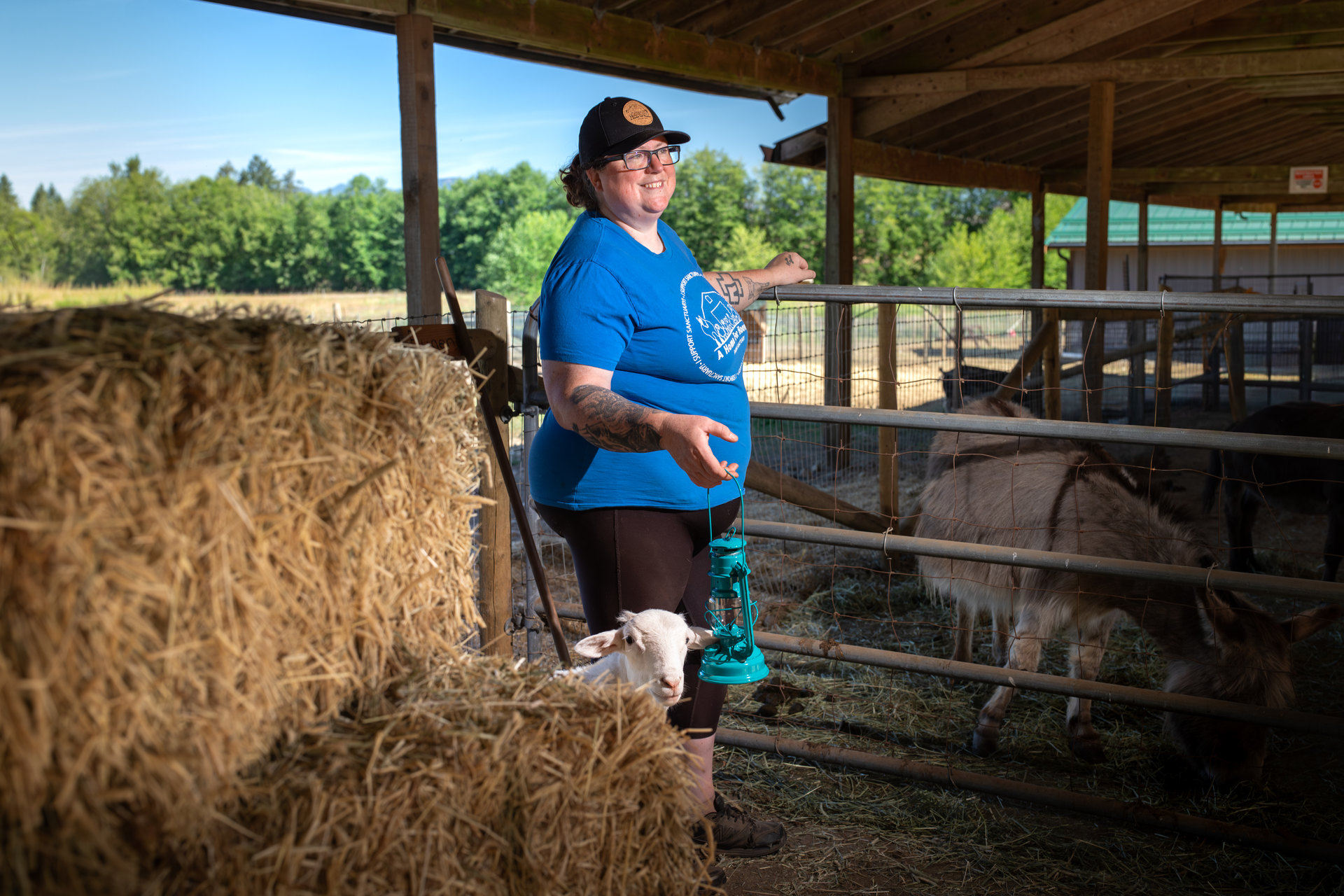
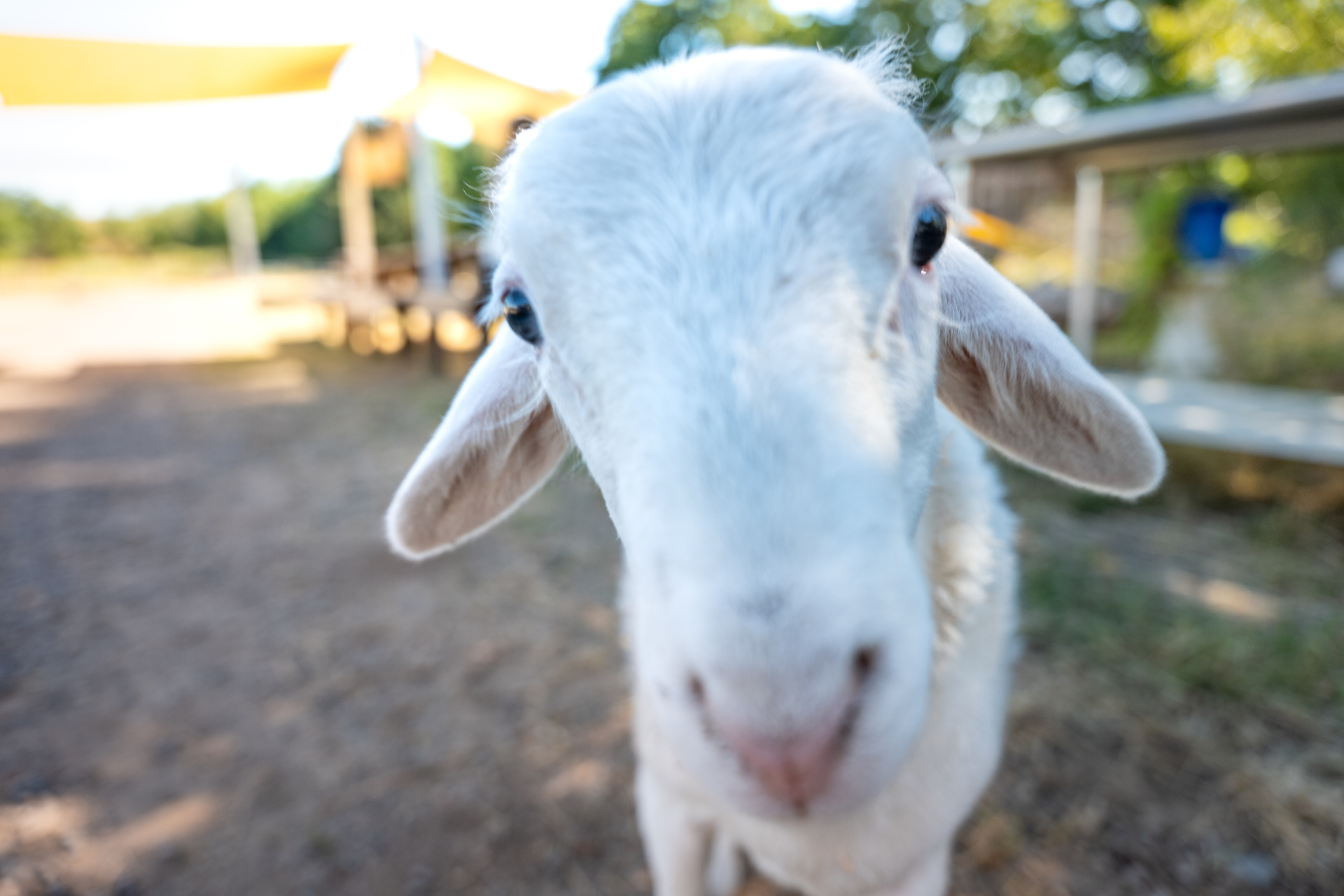
Every animal is housed in an appropriate enclosure, meaning everyone has their own space. Additionally, we have a six-foot perimeter fence. If a gate were left open by mistake, the animals remain contained and cannot leave the property. Right now, Sawyer is out roaming, but that is simply because he is small, does not have a permanent enclosure yet, and stays very close to me."
Little Sawyer Was Lucky: And Now Shadowing His Guardian
Michelle successfully balances managing this large organization with raising her daughter and pursuing her professional career as a manager within Island Health's laboratory services. Being able to raise her child around animals, in an atmosphere of love and compassion for all living beings, holds a very special meaning for her. This journey also reshaped Michelle’s personal life — after six years as a vegetarian, she transitioned to veganism and ultimately decided to dedicate her life to animal advocacy.
"I try to take every single Sunday off. There are usually a few minor things I have to attend to, but I try to designate one day a week to be completely away from work."
When Michelle says this, little Sawyer leans against her, trying to squeeze into her arms so as not to let go of his beloved guardian for a moment.
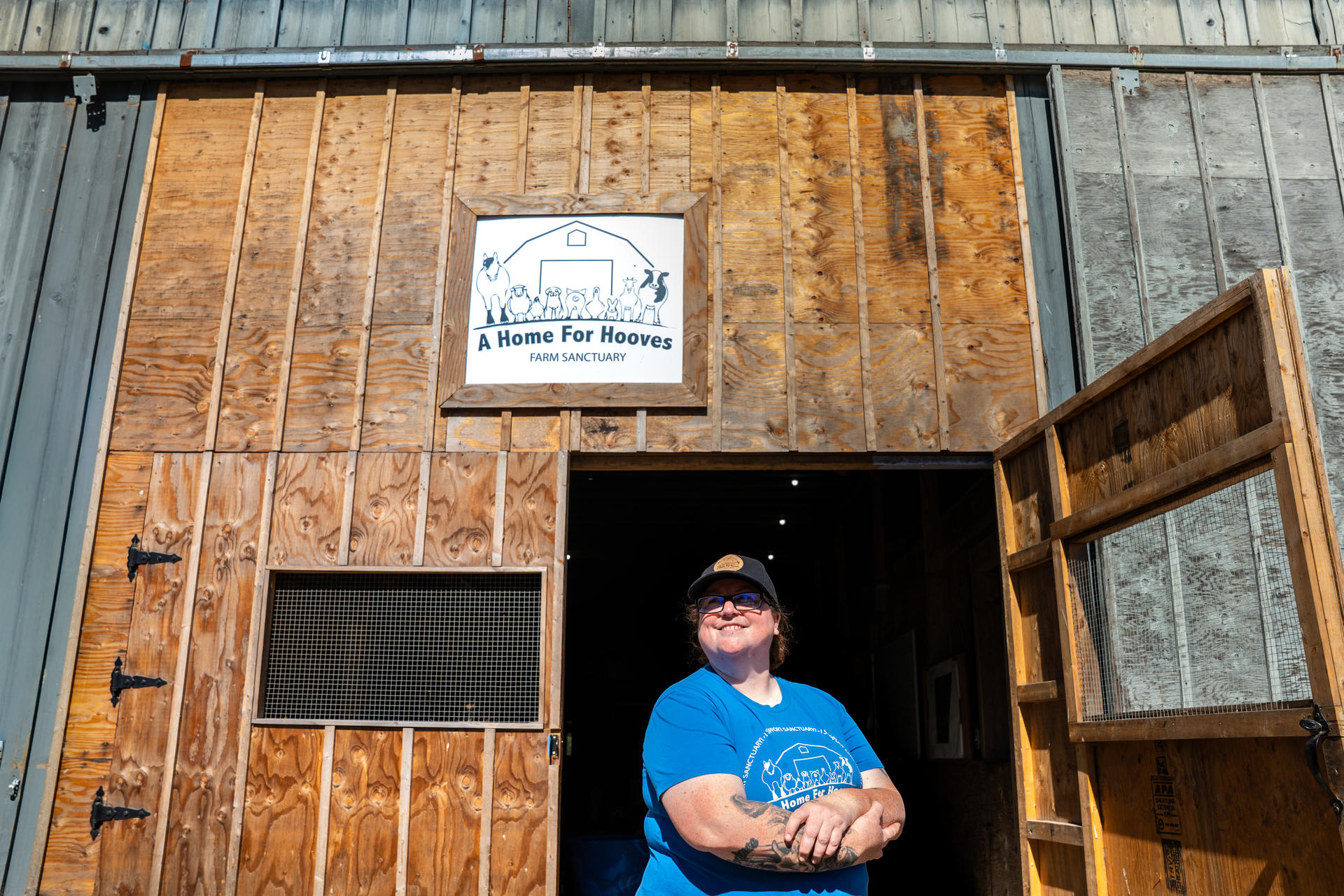
Farm Sanctuary
Foundation
Charitable Organisation
Registration # 791696313 RR 0001
4275 Howie Road, Duncan BC V9L 6N3
www.homeforhooves.org
homeforhooves@gmail.com
604-512-8362
Your Invitation Is Valid: Enter the Coordinates
Michelle Singleton’s story is a powerful example of how a small, heartfelt initiative can transform the lives of hundreds of creatures. What began as one person's casual volunteering grew in less than a decade into one of the most renowned animal rescue centres in the Cowichan Valley Regional District, on Vancouver Island, in British Columbia, in Canada, and on the third planet from the Sun (nestled in the Local Interstellar Cloud, within the Local Bubble, in the Orion Arm, on the outskirts of the Milky Way) — just outside of Duncan, right past Bright Angel Regional Park, turning off Koksilah Rd onto Howie Rd, at number 4275.
Remember this address. Come by for a tour, an educational event, or simply to volunteer. Come out to meet the locals — a diverse bunch with hooves, wings, tails, and feathers. Who knows? A few hours spent at the sanctuary just might change your life, too.


