Stories Carved in Cedar
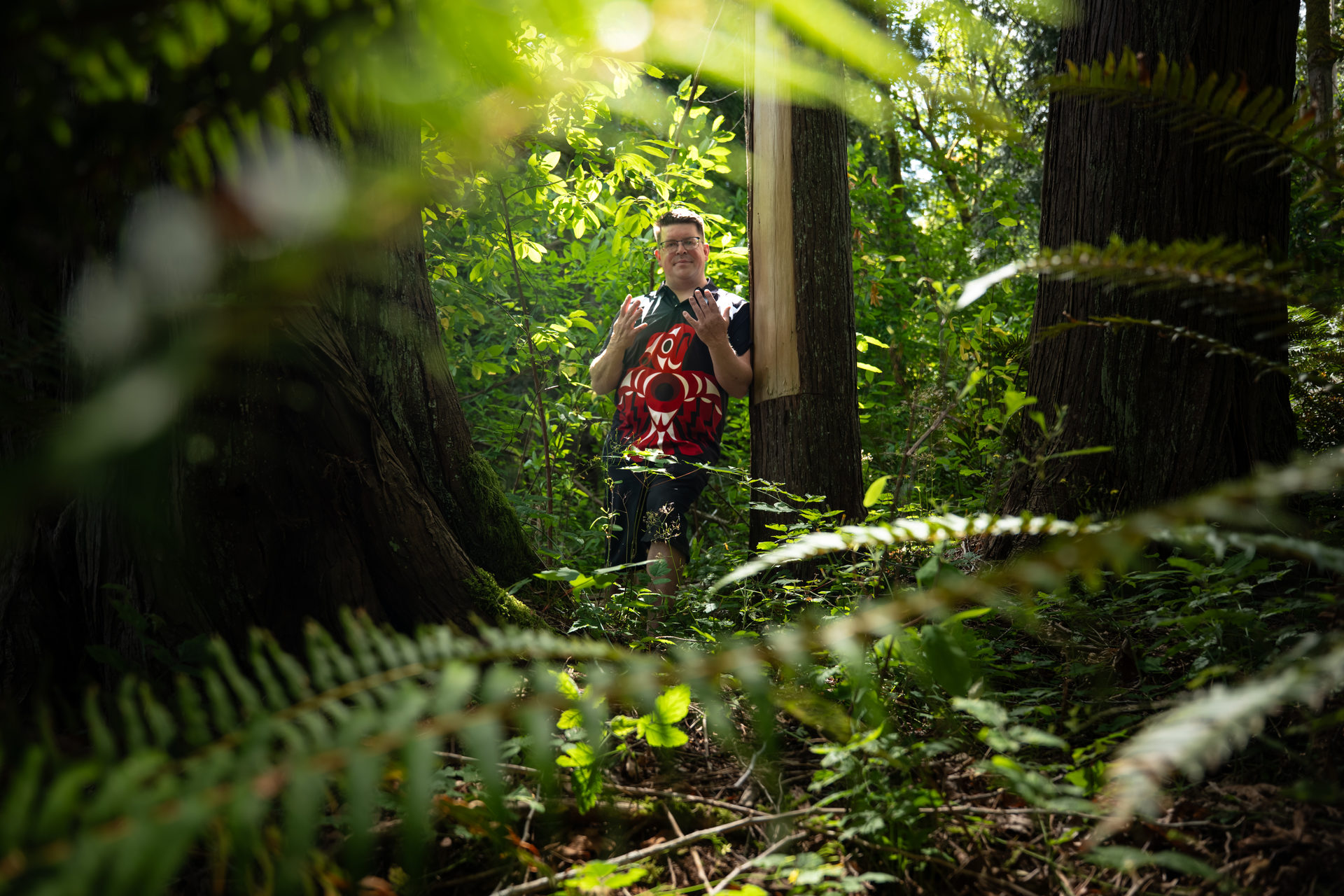
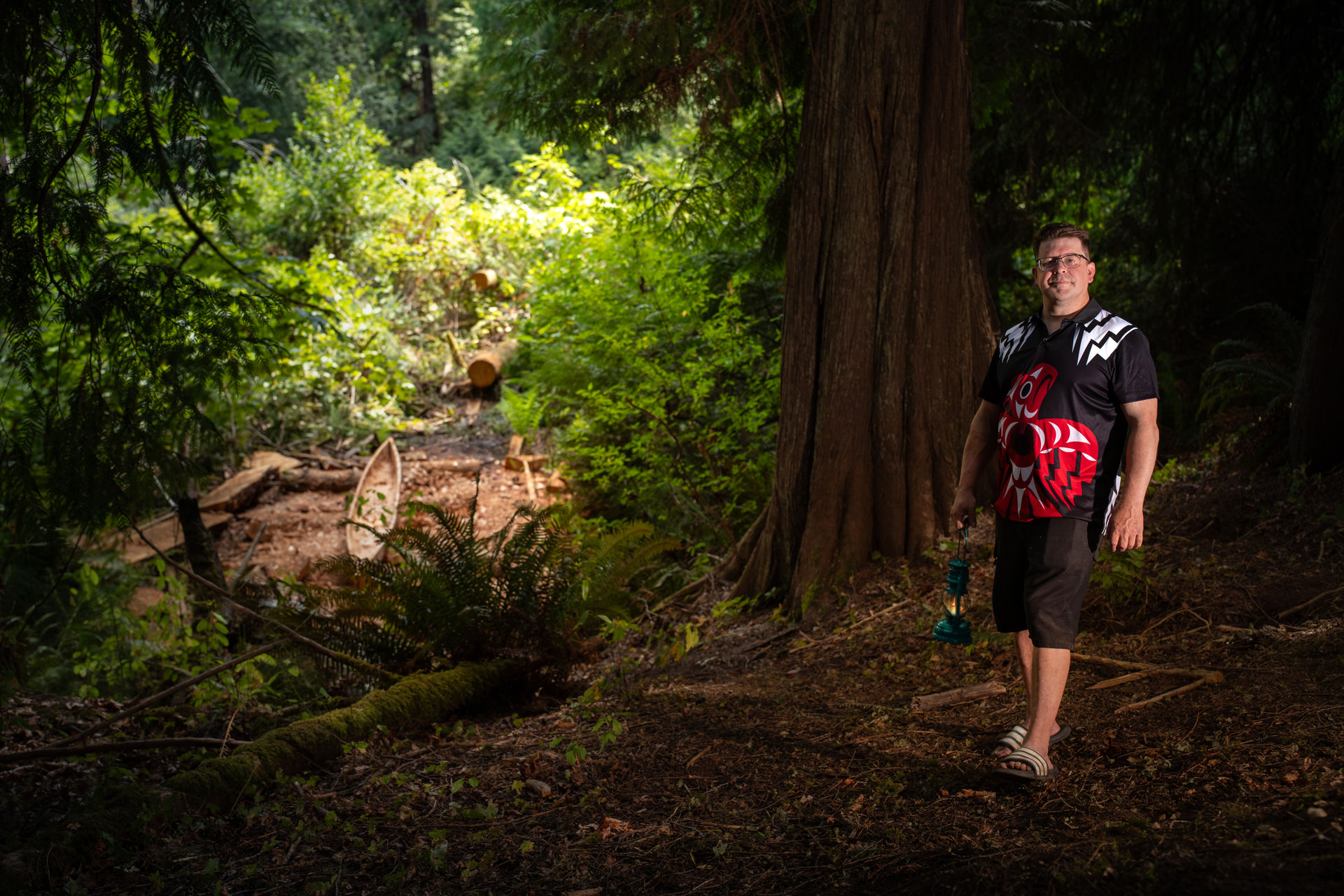
On the coast of Vancouver Island, where ancient cedar forests meet the Salish Sea and the Pacific Ocean, Indigenous traditions endure despite all the hardships of history, and among those helping to keep them alive is an extraordinary man. As a carver and educator, he works with wood not simply as a material; for him, western red cedar is x’pey’, a living relative with its own spirit. For over three decades, the artist has dedicated himself to revitalizing Coast Salish canoe culture, reconnecting people with the Land through healing practices rooted in humility and devotion to the community. This is the story of Beau Wagner — a cedar mystic.
"Our ceremonies are so powerful and they build community, with all the levels of community being in line with one another. It takes our little ones, and our working adults to help the little ones grow, and our older people who guide us in a good way. The beginning, and the middle, and the end, all of us in line together.
The way everything is set up now, we're kept divided from each other. So what I really want to see is more of our ceremonies done on the land. I'm a ceremonial holder for the steaming, for transforming the canoes, and there are very few people who can hold that ceremony out on the land. I want to see more of it. More of the old ways of cooking the salmon around the fire. More community-based ceremonies, where every level of community is there together, the little ones and the working ones and the old people, all of us experiencing that ceremony on the land."
Through the Storm to the Land
Beau was born and raised in Nanaimo. As a descendant of residential school survivors, he speaks openly about the challenges of generational trauma. Losing his father at a young age, Beau grew up without parental guidance, struggling with intense feelings of anger, unworthiness, and addiction to alcohol and drugs. Although he later went to school to become a shipwright, he still felt disconnected.
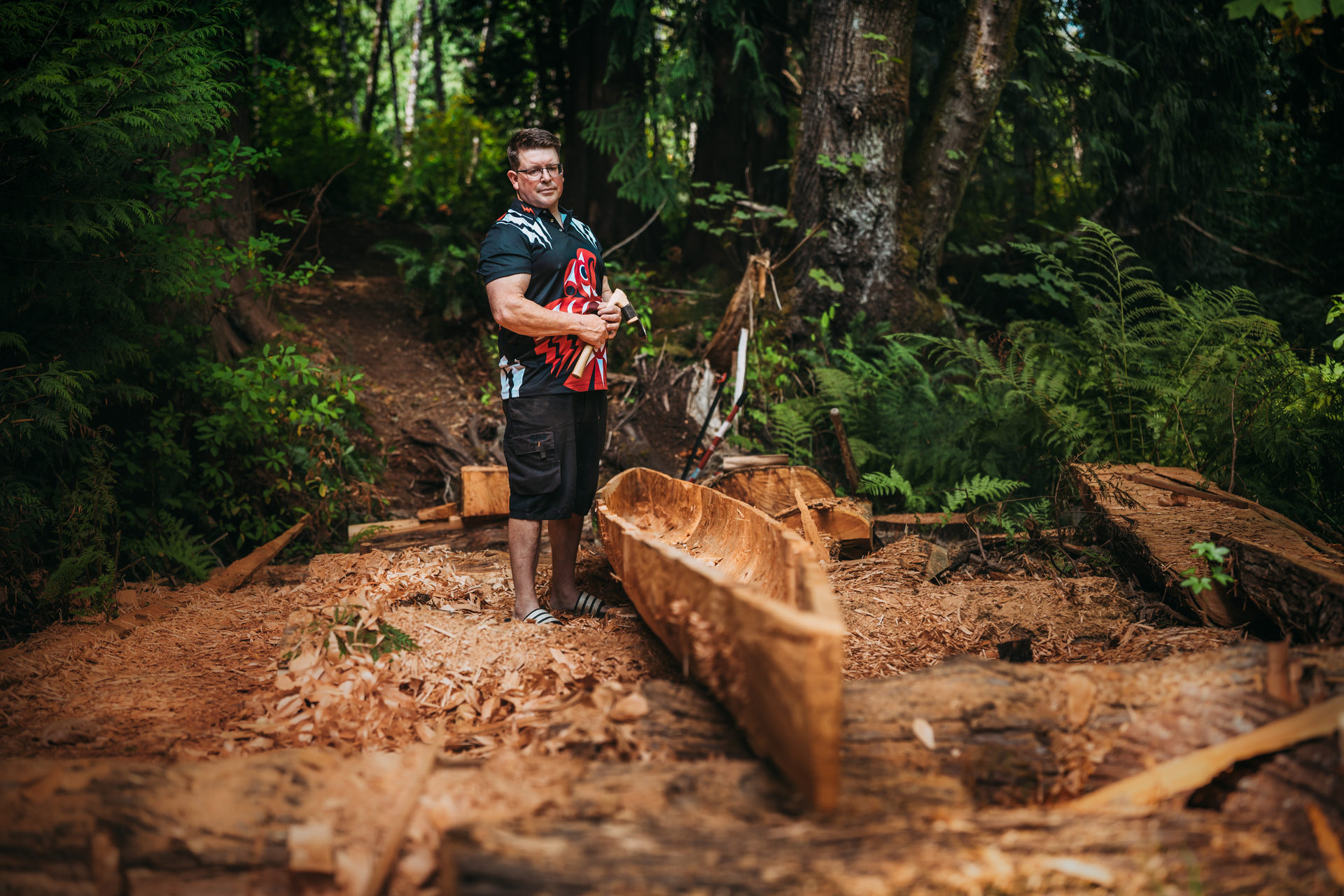
Everything changed when he found his way back to the Land through working with cedar and met his mentor, the late Stz’uminus Elder and Master Carver ShYa’QuThut (Elmer Sampson). Alongside his teacher, Beau found love, belonging, joy, and kindness for the first time in his life. For five years, he lived and carved alongside Papa Elmer at Thuqmin (Shell Beach). There, he absorbed not only carving techniques but sacred teachings — snawayalth — allowing him to truly heal and focus on his gifts.
"Hundreds of people showed up before me to learn from Elmer, from ShYa'QuThut. And none of them left with the skills. None of them were willing to give up their Western world life to slow down and live with him, to wake up each day and watch the sunrise, to eat with him each day, to pray with him each day.
Because carving a canoe goes so far beyond making a physical object. When we work with the cedar, it's absorbing everything around us, our words, our prayers, our movements, and all the living things that are around us as we carve. Every one of us has thousands of ancestors who walk with us. It's our Coast Salish belief that some of them need to come back into this world to share their love, their joy, their kindness with us one more time. To be with grandkids they never got to meet. To help lift the physical world up. There are times on this earth walk when we're struggling, and all of a sudden we have this inner strength, this courage that gives us the momentum to carry on as a new day begins.
When you carve on the canoe and your adze hits the cedar and it drums, you hear it here in the physical world, but the belief is that it echoes into the spirit world. It wakes up the spirits, and they hear what you're doing. And when you do the transformation ceremony, using all the earth's elements, the fire and the water and the earth, it opens a portal into the spirit world, and an ancestor can embody that canoe and take life.
So it's our responsibility as canoe makers to understand these rituals and these ceremonies. To understand that when you're working with cedar you're opened up to the spirit world, and there are all kinds of spirits around us, including bad ones. I spent a lot of years with my teacher, and with his brother Manny Sampson, learning about that spirit world. The carving is really a connection to another world."
Into the Future Together in the Healing Canoe
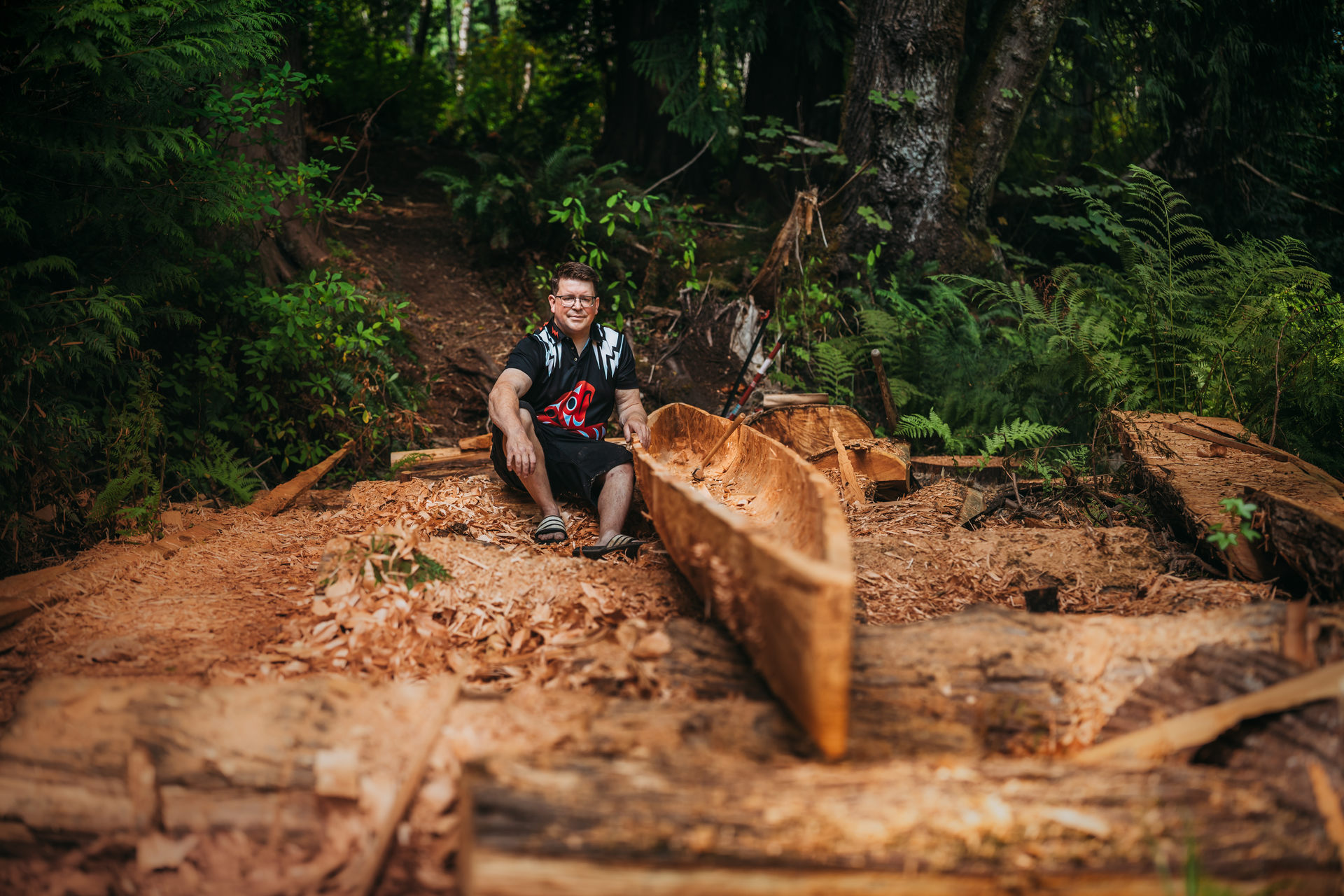
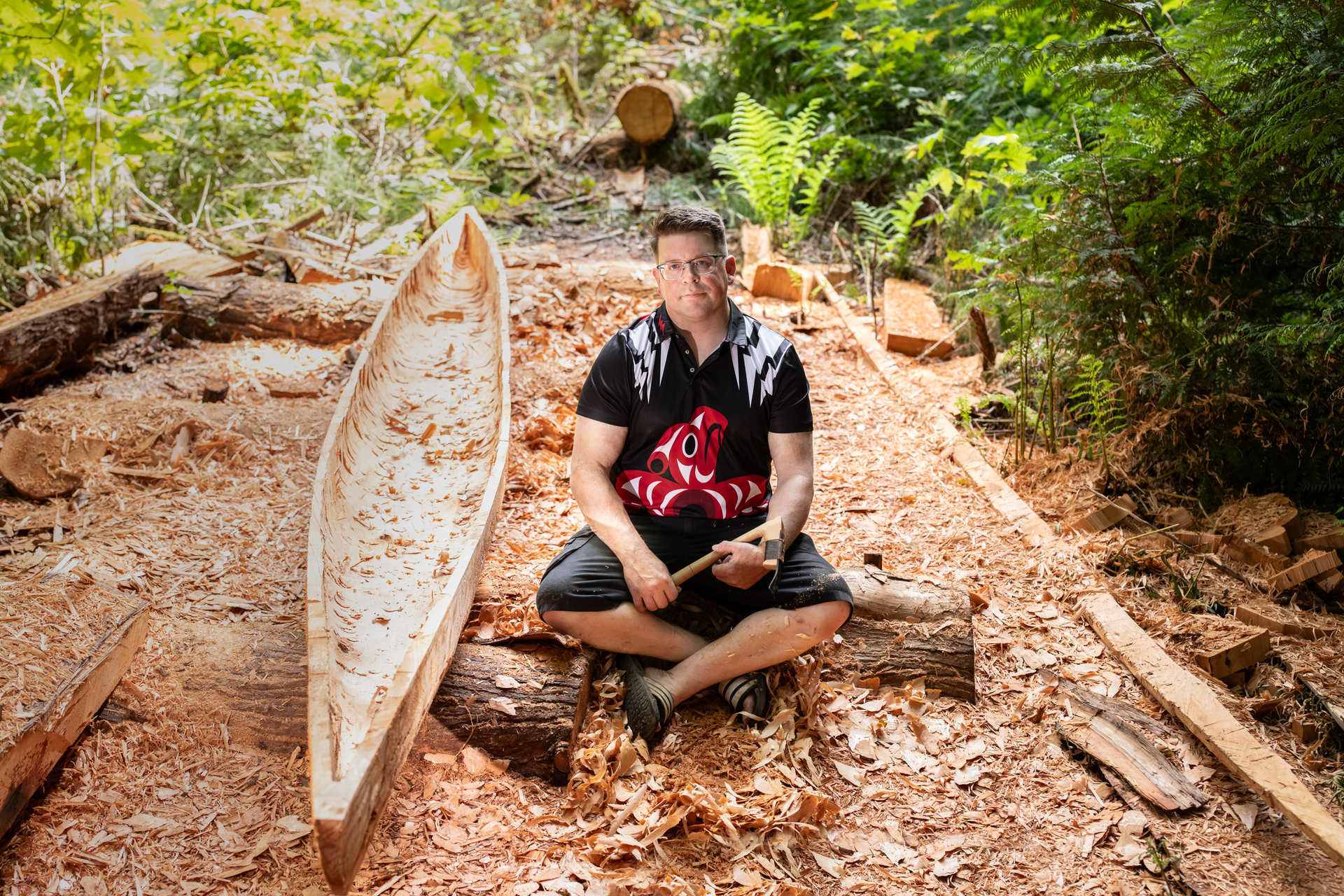
In the spring of 2019, to honour his teacher’s wishes, Beau launched the Healing Canoe Program. This immersive seven-month cultural program runs throughout the school year, during which students work alongside Beau and Stz'uminus hereditary leader George Seymour to transform a giant Western red cedar log into a traditional dugout canoe.
The project brings together classes from School District 68, as well as participants from the Footholds Therapy Centre Nanaimo. The physical carving process is closely woven with Hul'qumi'num language teachings and traditional knowledge of local plants. This is because, as Beau explains, carving a dugout canoe is a sacred process during which the wood absorbs and releases the vital energies around it, meaning that as the cedar transforms, the people transform with it. Since its inception, Beau and the students have carved four canoes together.
The spirit of this project is beautifully captured in the documentary film "Our Teacher". The film follows Beau and elementary students on Gabriola Island as they carve a canoe together, demonstrating how the cedar releases its life force, transforming the surrounding world with kindness, love, joy, and belonging.
"It starts with the smell of the cedar. I don't just hand the kids a tool and say okay, carve. I tell them the story behind the cedar first. The story behind the elements. Why the cedar is the heart of our culture, and how when you work with it, it's absorbing you. Not just your thoughts, but your very breath. As you work the cedar it takes in your energy and holds onto it. And then something comes out in the kids. An instinct they didn't know they had.
It was the same with me. When I started working with my teacher there was a strength in me I couldn't see, but he could. So now I get to watch the kids make the old new again, the way my teacher would say it, and it gives them this sense of empowerment, this self-worth, like they actually belong in that space and that time. They're carving, but really they're building themselves.
So many kids are taught from a young age, that's dangerous, don't touch that, put that down. And here is an adult telling them the opposite. You matter. Your voice matters. What you do here today is going to carry on and ripple into the future. Some of them test it. I'll get a kid stabbing at the wood, kind of looking at me like, look, I'm being dangerous. And I just say okay, here, this is how you hold the knife. You have to let a few of them show that little bit of rebellion. But then they look around at all the other kids who are present, doing a good job, and it encourages them to try too."
Honouring the Ancestors and the Unborn Souls
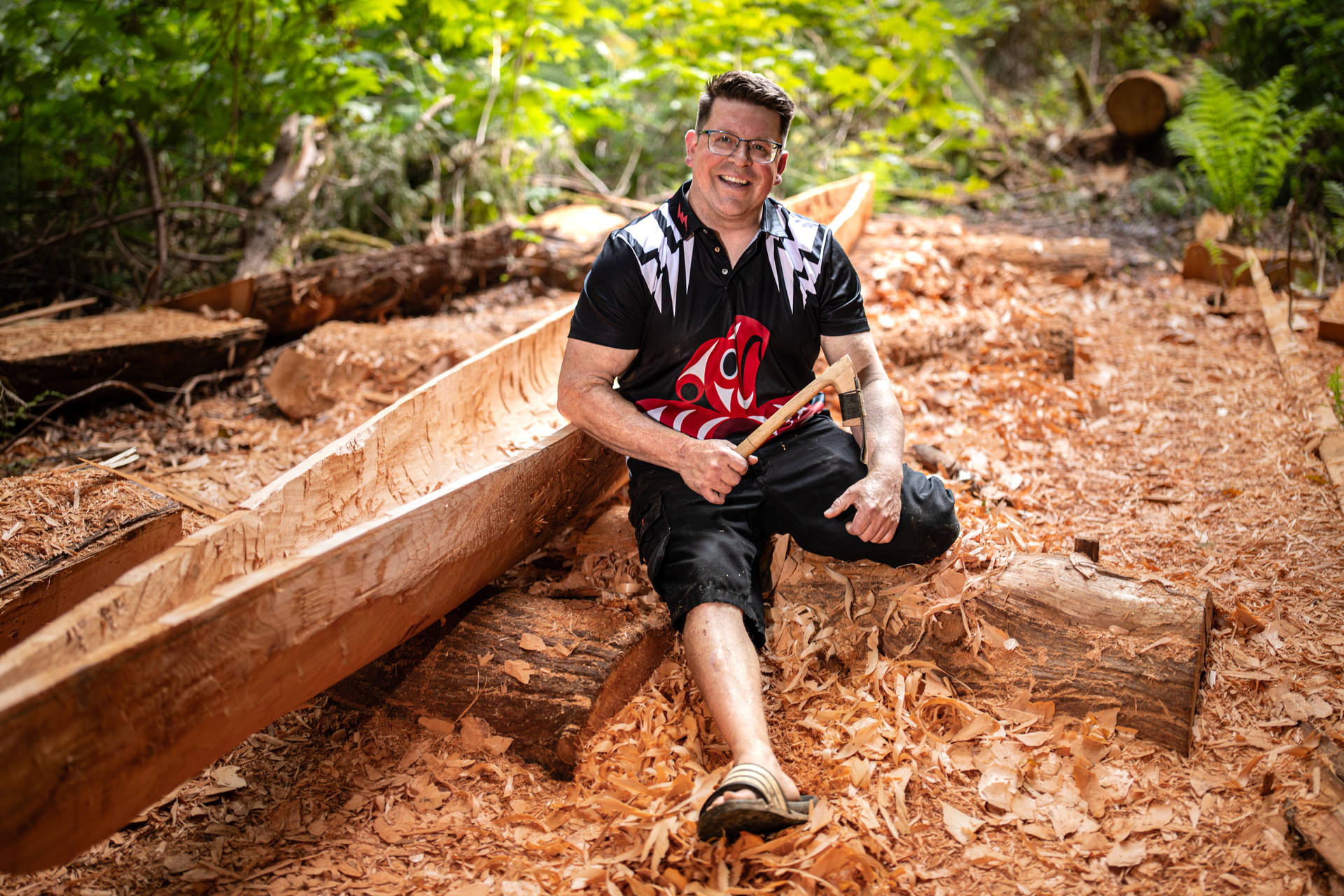
A sort of continuation of the Healing Canoe Program is a new project that Beau is participating in. In the summer of 2026, he became a resident at Brentwood College School, where he is carving welcome poles titled “Honouring Our Salmon.”
"The salmon is a critical relative to the Coast Salish, but really it should be a critical relative to all human beings. I know there's a global market we're all tied into in the Western world, but it's so important to take care of our own backyard. To ask how we maintain the land we're on so that our children and our grandchildren have a better environment than we have today, because we've done so much damage already, to the land, to the ocean, to the air, to the water, to the plants and the trees.
Our grandmas and grandpas sacrificed so much in their lives so that we could be here today, and that's the same thing the salmon do. They give up their lives so that the people can live. Before contact, our people really relied on the streams and the rivers and the creeks. That was our grocery store. And you would never see anyone destroy or alter the bed of a creek. It was whole families whose job it was to walk up and down the creeks, making sure there were enough rocks in there to create the slow spots, the resting places, where the fish could slow down and feed on the insects and the grasses and the plants growing along the banks. People spent their whole lives maintaining the rivers and the creeks, taking care of them, taking care of the ocean, and never taking too much.
So the poles are carved in honour of those sacrifices, from the people who came before us, and honouring the little souls who haven't even arrived here yet."
True Recognition: More Than a Checked Box
For Beau, bringing the canoe and totem pole traditions into the school system is about much more than just hands-on carving. It is a profound effort to integrate Indigenous worldviews directly into academic disciplines — a journey that reveals both great promise and deeply rooted systemic challenges.
"On the staff side, there's an Indigenous Education class that's very involved and really understands what I'm doing. The bigger piece, weaving our ways of being into the academic classes, the math and the science and the history, that's still new ground. There's something they work with called the First Nations Principles of Learning, and the intention is good, but bringing that into a colonial education system is hard, and there's a lot still to learn. It asks people to see from a different worldview, and that takes time.
To me it's all interconnected, it's a no-brainer. When I carve a mask, it's all math. On the house posts I have the Salish eye, and I had to scale that design to the right proportions so it reads from a hundred feet away, so there's a lot of math in that, a lot of science. And the history is in there too, in how we've held onto our rituals and our ways of being. Everything I'm saying isn't really my words anyway. They're my papa Elmer's words, and I'm just echoing them into the future. To me that's social studies.
The government working in partnership with our knowledge keepers, so that land-based education is accessible to every single school in BC — but I feel that a lot of what we're doing as knowledge keepers and Elders gets treated like a land acknowledgment. Like a box being checked. The Western world doesn't always see the actual importance of this work, so it doesn't get recognized the way it should. And for me, that comes back to recognition.
I'd love to see our knowledge keepers given more of a role on that academic side, and I'm still finding how to connect those dots with the school.
Our Indigenous peoples don't have university degrees in knowledge keeping. There need to be master's degrees and PhDs handed to the people who already hold this knowledge, who have already done the work and already carry it, and they need to be recognized inside the school system as true knowledge keepers."
Cedar for Everyone
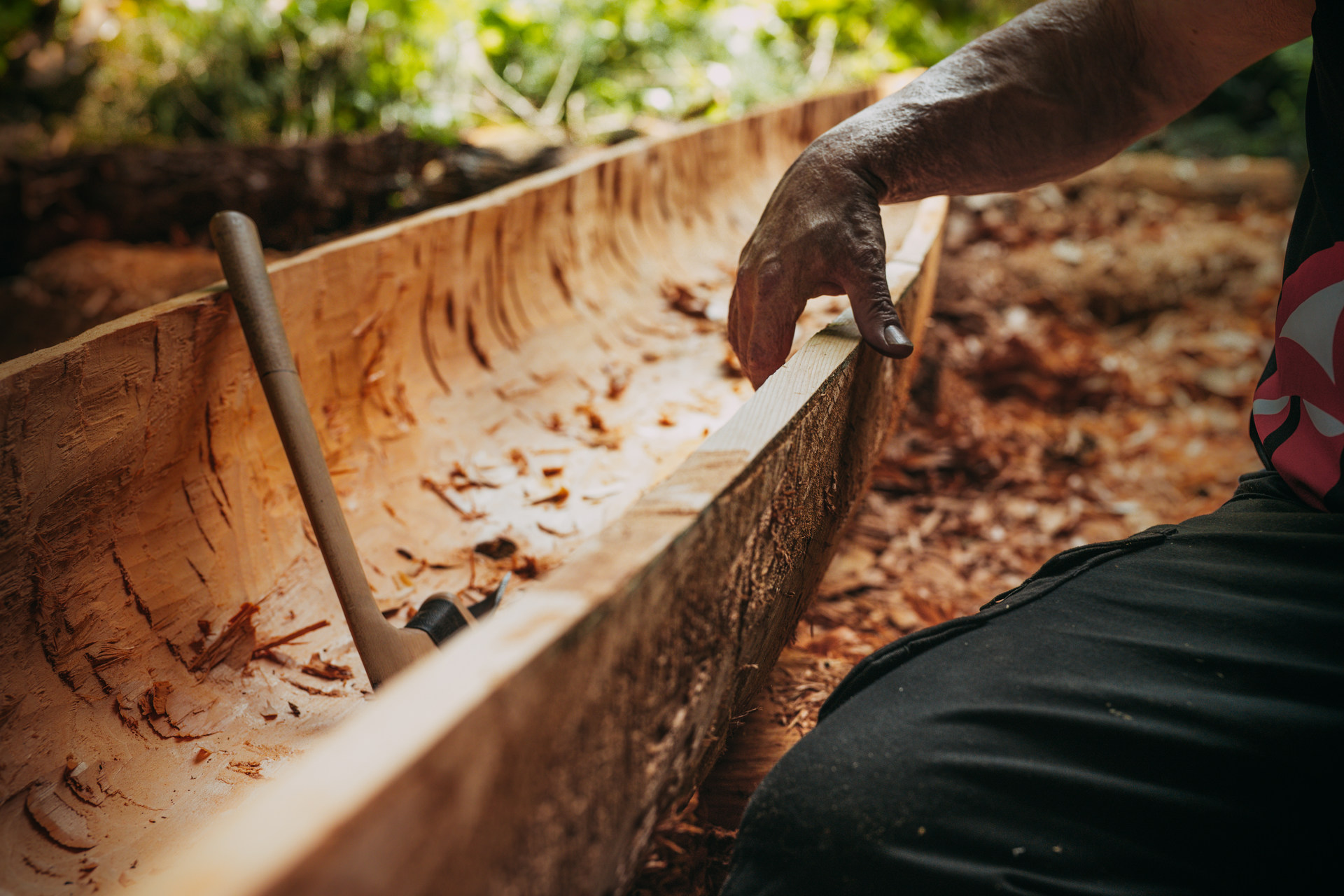
Today, Beau Wagner actively develops Land-based education programs. His workshops help participants ground themselves, support mental health, dissolve stress, and learn to listen to nature. Instead of traditional classrooms, Beau brings educators and students together in a lush, old-growth temperate rainforest amidst coastal Douglas-firs, Garry oaks, and red cedars, where they connect in a circle, share forest tea around the fire, and work with wood.
Beau has developed and delivers programs tailored for students of all ages, from the youngest to the oldest, as well as for educators. The curriculum progresses from introductory Coast Salish art, songs, and drawing (K–12) to advanced cedar weaving projects, including protective bracelets, headbands, mats, and traditional clappers that embody the principle of “Naut'sa mawt”. For the oldest youth (Grades 8–12), dedicated Carving Workshops teach the use of professional tools. All these hands-on projects pass down ancient cultural traditions while harmoniously strengthening both emotional and physical well-being.
"We have this profound ability as human beings to shape the world around us, and we could be shaping it in a good way.
There are so many of our Elders and knowledge keepers who have to work a mundane Western job just to survive, and those same people could be profound land-based educators. They could give kids a completely different kind of education. It would be healing for our old people to be doing that work, and it would have a huge impact on our communities, on how empathetic we are with one another.
There's this endless amount of resource that we're not using. We have parks all up and down this coast, out on the islands, out on the water, and a lot of them aren't really accessible to the public. Every year hundreds of trees fall in these parks and just rot on the ground, when every one of them could be used for something in our way.
I would love to see some of our parks turned into places where knowledge keepers can practice their knowledge keeping. Public outdoor workshops, where schools bring their kids, with just some basic infrastructure, gazebos, somewhere you can teach outdoors all year round. Whether it's working with medicines, or following the migrations of the birds and the animals that move through our ecosystems through the seasons, right down to the mushrooms under the trees.
What can we do today, like raising fry and releasing them into the streams so there's salmon tomorrow? I would love to see fishermen out there teaching the kids how to fish. The salmon brought back to these places, the kids learning how to process and smoke the fish.
Right now the government plants monocrops, which are hard on the land. We could be planting whole forests, and planting within the forest, feeding not just people but creating ecosystems for the owls and the birds and the deer, right down to the shrews.
I see BC as a place where people from all over the world could come and reconnect to the planet, and to these resources. Where we stay in balance with the world around us, producing more for tomorrow. Not so focused on today, but on seven generations from now."
Stronger Together
Beau Wagner does not limit his work to youth education. Drawing from his own experience, he understands how modern society promotes a false sense of power built on being tough, disconnected, and dominant, which ultimately leaves men empty and alone. He knows how difficult it can be to speak openly about mental health, grief, or intense emotions. To address this, he created the “Men's Strength is Together Circle” for adult men.
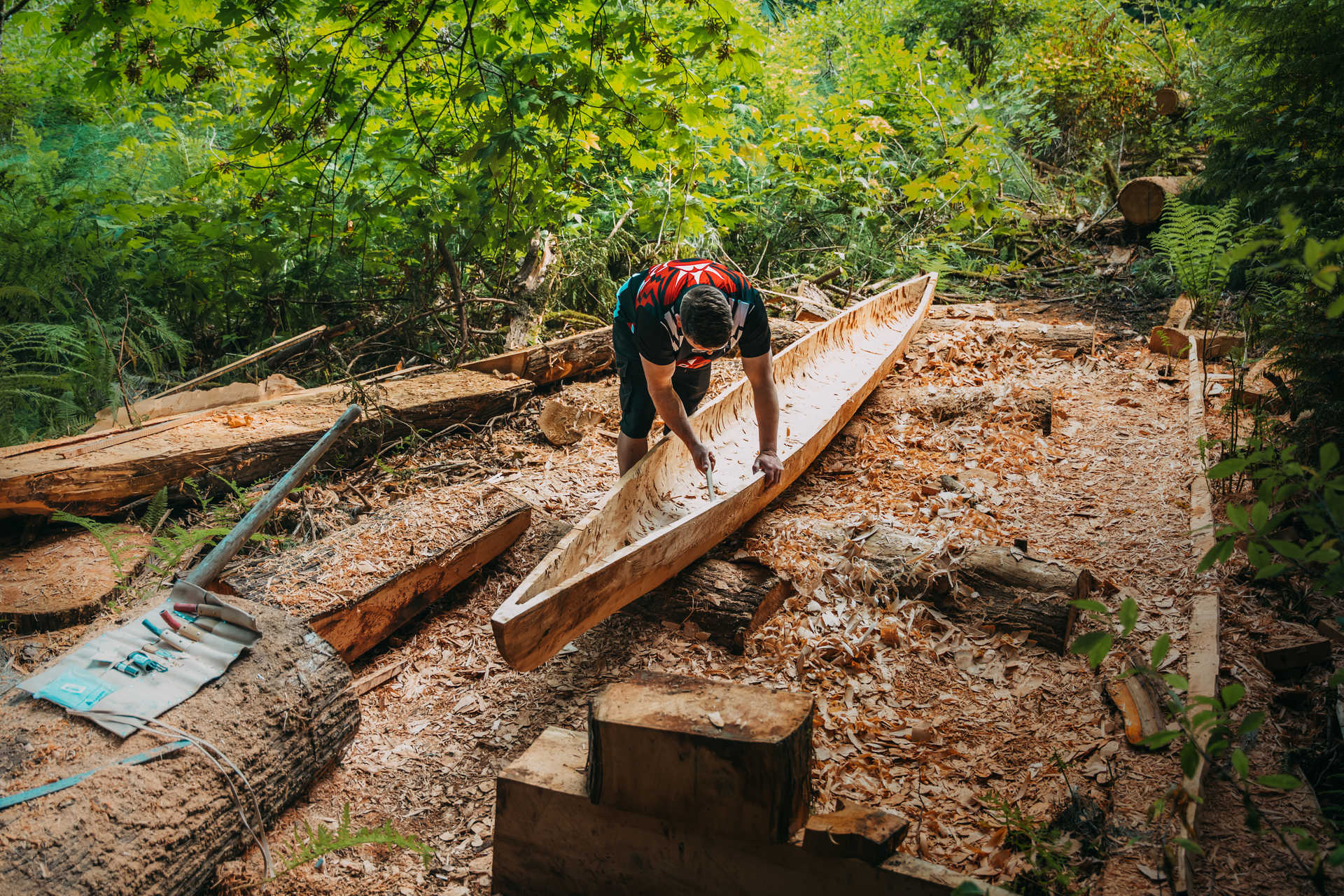
They gather on the Land around a fire, pick up carving tools, slow down, and learn to release past trauma or heavy emotions. However, Beau reminds participants to join the circle only when they are in a good place, because cedar absorbs the energy of those who work with it, and carving while in a negative emotional state can pollute not only one's own piece but the work of everyone else in the circle. This shared experience helps reconnect with the community, building the deep roots needed to be strong fathers, brothers, and partners.
"I like to run the men's circle with food and carving and weaving. It's really all of my programs brought into one circle. Sometimes we're just sitting by the fire, eating, sharing. The heart of it is just giving men space.
Being a man, and being with other men, you're taught you can't feel emotion. So to be vulnerable and to share is a big thing. I've been through a lot of trauma myself, my younger years were really hard, and into my adulthood too. So I share my own experiences first, and that opens the space for the other men to share theirs. And the healing that happens through the art is so profound. There are things moving inside you when you create, and with the fire there and the food there, there's spiritual growth happening without anyone even naming it.
We're all human beings. It's okay to cry and let it out. And then all of a sudden you have this whole capacity again for a new beginning.
The men seem to leave lighter. With more emotional bandwidth, more range. By letting go of those traumas we all carry, and healing through the art, that capacity just grows. They're more open to being emotional, more open to sharing."
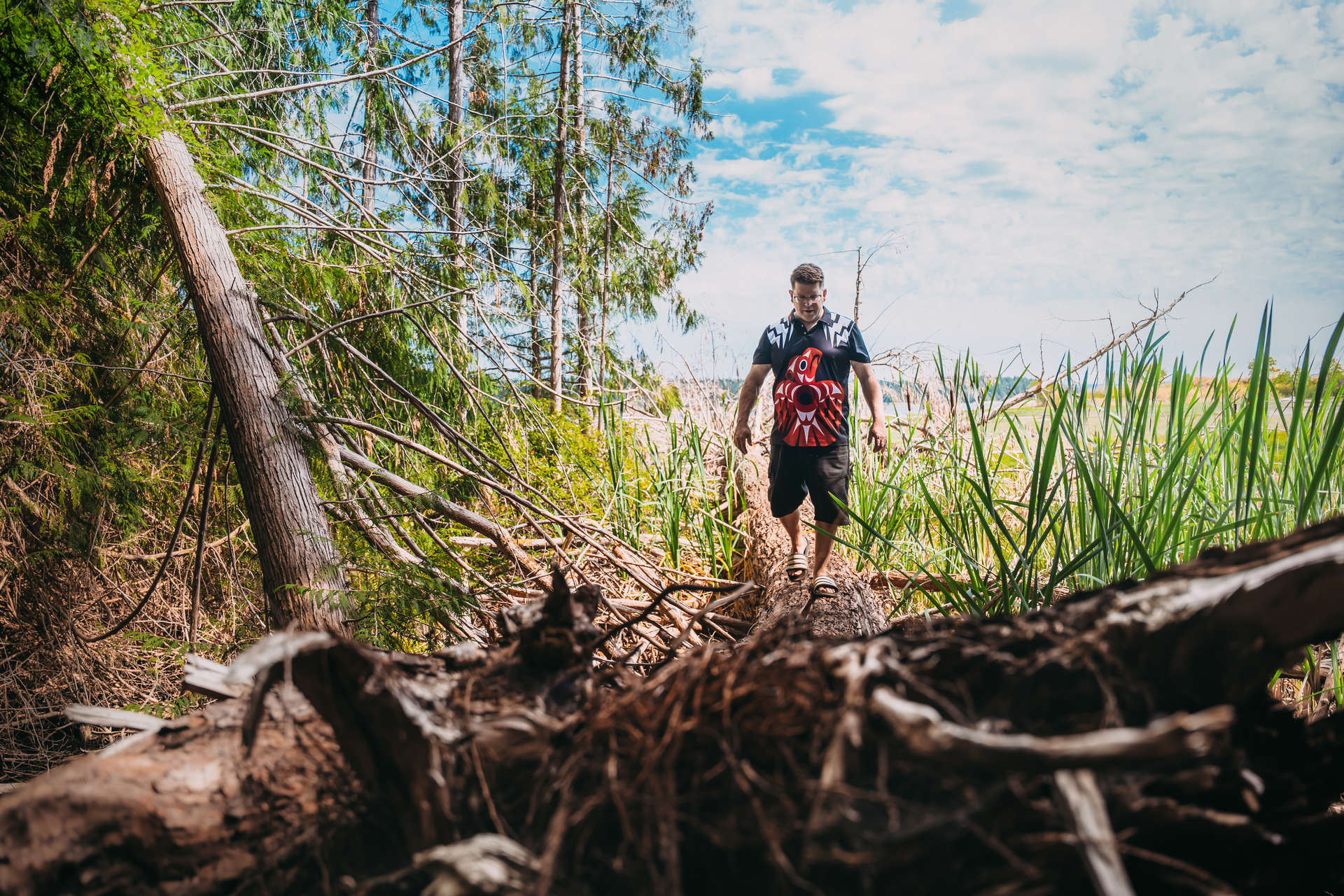
Humility, Accountability, and Love
In his workshop, Beau continues to craft made-to-order authentic ceremonial feast dishes and canoe bowls, classic Coast Salish design tribal journey paddles, cod lures carved with the Blind Wolf story, carved combs used in traditional weaving, cedar hats, clappers, and cedar bracelets.
Today, Beau’s public artwork — including masks, paddles, traditional bentwood boxes, and welcome posts — can be found in schools, community spaces, and Indigenous health centres across Vancouver Island, from Cowichan to Qualicum.
Despite growing recognition, Beau Wagner remains deeply grounded in the foundational values taught to him by Papa Elmer: humility, accountability, gratitude, and love. In every cedar creation, he carries those teachings forward, helping others slow down, heal, and find their way back to the Land and themselves.
"I don't feel like I'm owed anything. It's more that this is what should already be. I've given up my life in pursuit of working with cedar, with the land, with the animals and the trees and all the living beings.
The cedar can't grow by itself. It needs community. It needs the sword ferns, it needs the salmonberry and the thimbleberry, it needs the salmon. It needs all of these living things around it just to grow. And it's the same when you carve it. It needs community too.
When I look at the youth, what I feel most is responsibility. I want to build the need for this work, so that when these young ones are ready to step into a cultural leadership role, there is actually employment waiting for them. So they can do this work and be self-sustained in it. That's what I'm hoping for them, even where I haven't had it myself.
Yet, out of all that next generation, I'm praying it doesn't take me into my eighties before I find another human being who understands these things — an apprentice I could pass this knowledge and these traditions on to. But that is how long it took my teacher."