
Finding Their Place
Vancouver Island is more than the Capital Region in the south and the eastern shore washed by the Salish Sea. Beyond the urban areas and larger towns, there are smaller communities and villages, far from industrial centres and major transportation hubs. And in these places, surrounded by extraordinary nature, life moves a little differently. Some might say more slowly. Yet it is often in communities like these that you can find yourself, your own path, and your own place under the sun much more easily — and sometimes much sooner.
Gold River is not the smallest of these communities, and the drive from Campbell River takes “only” up to an hour and a half. But this is already a very different world. This is a land of waterfalls, caves, and mountain trails. And just a short drive west is a small harbour on Ahaminaquus 12, opening onto the water route Muchalat Inlet to Yuquot and the Pacific Ocean. Only about 1,500 people live here, so everyone knows everyone — what they do, who their parents are, and what sort of “character” they are. Earning respect in a community like this — and keeping it — is not something that happens overnight.
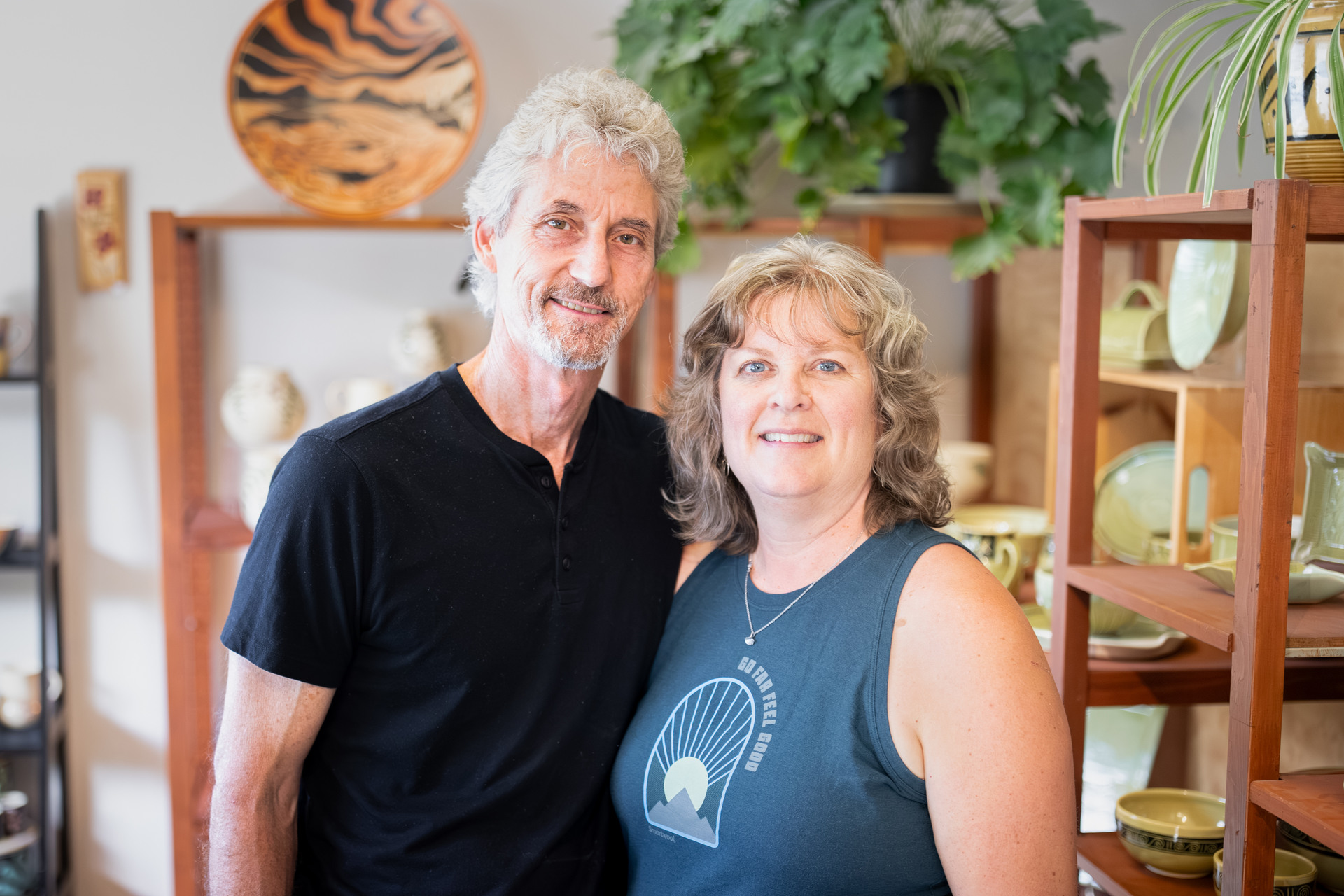
This is a story about two people, so different and yet so alike, who became one. One story, shared by two, that began with love. A common passion and countless changes shaped them over the years, until a long and winding journey brought them back to the source. In the end, they found their place. Their place. Shared. One for the two of them.
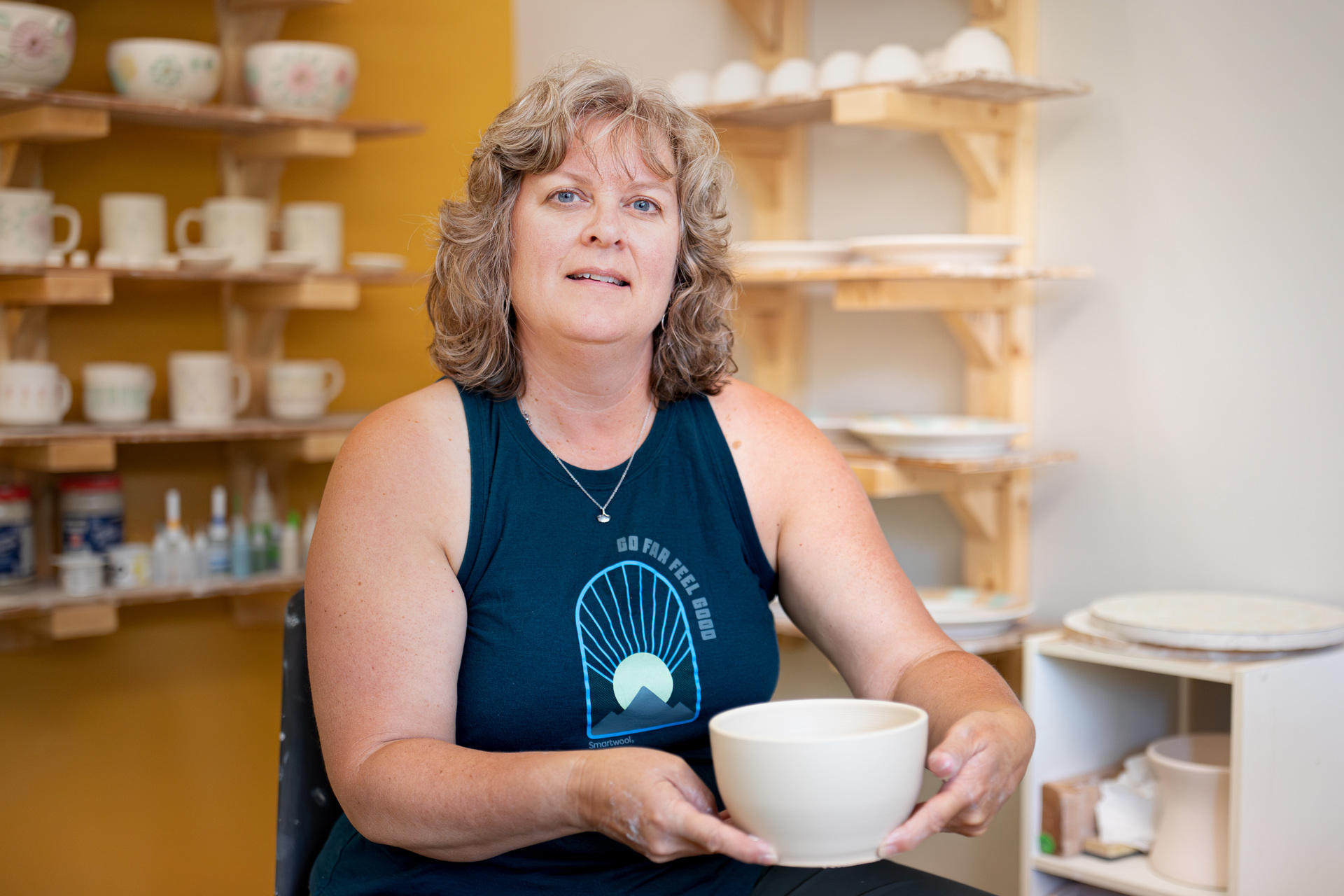
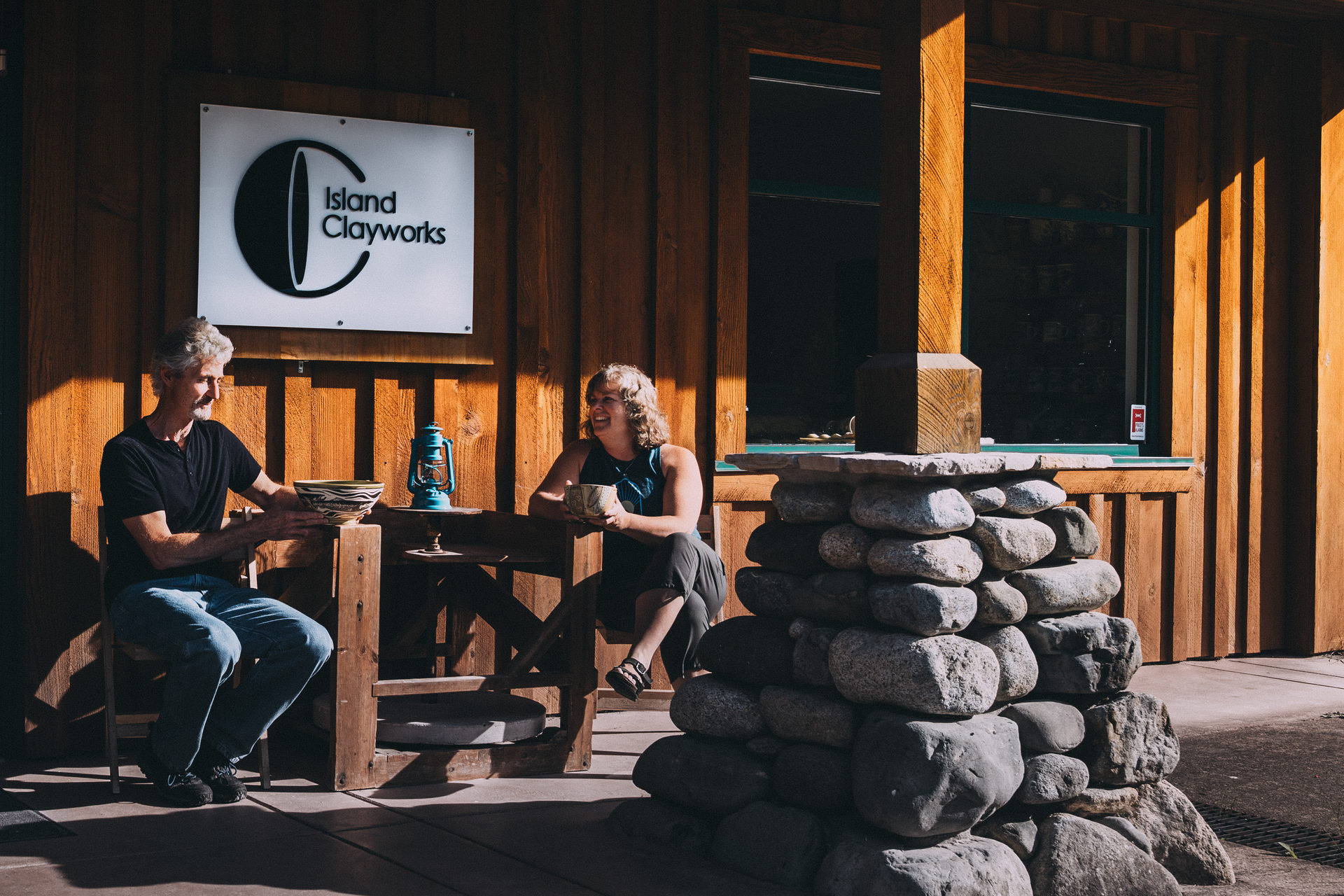
Anita and Neil Lawrence live and work in Gold River, running their ceramics studio and gallery, Island Clayworks, and welcoming guests into their home at The Potter’s House B&B. And this is their story.
The Beginning of the Journey: In Love, and in Love with Ceramics
They were both raised on Vancouver Island: Neil in Gold River, and Anita in Victoria. They met at art school while studying for their Associate of Arts Degree at Camosun College.
Anita saw Neil through a window while he was working in the ceramics studio, creating a sculpture in his lap while resting his feet up on a table. “I might have to talk to him,” Anita thought. So she did. That was in 1987, and their dialogue continues to this day, nearly 40 years later.
They married right after art school and, like most young couples, found themselves facing very practical questions: paying off student debt, the need to earn a living, and, at the same time, the lack of a clear understanding of what exactly they wanted to do with their lives.
At first, they tried settling in Neil’s hometown of Gold River, but after just a few months, they realized it wasn't for them and they needed more creative support. So the couple moved to the Lower Mainland, where they found work. Anita worked in the mental health field for a couple of years, while Neil worked for the City of Burnaby.
Ceramics, however, never left their lives. They visited art centres, took part in workshops, and continued to create in their spare time.
An Island Boy and an Island Girl Return to Vancouver Island
For about three years, they lived on the Lower Mainland, but eventually returned to Vancouver Island. When they returned, Neil worked as a contractor for Shaw Cable.
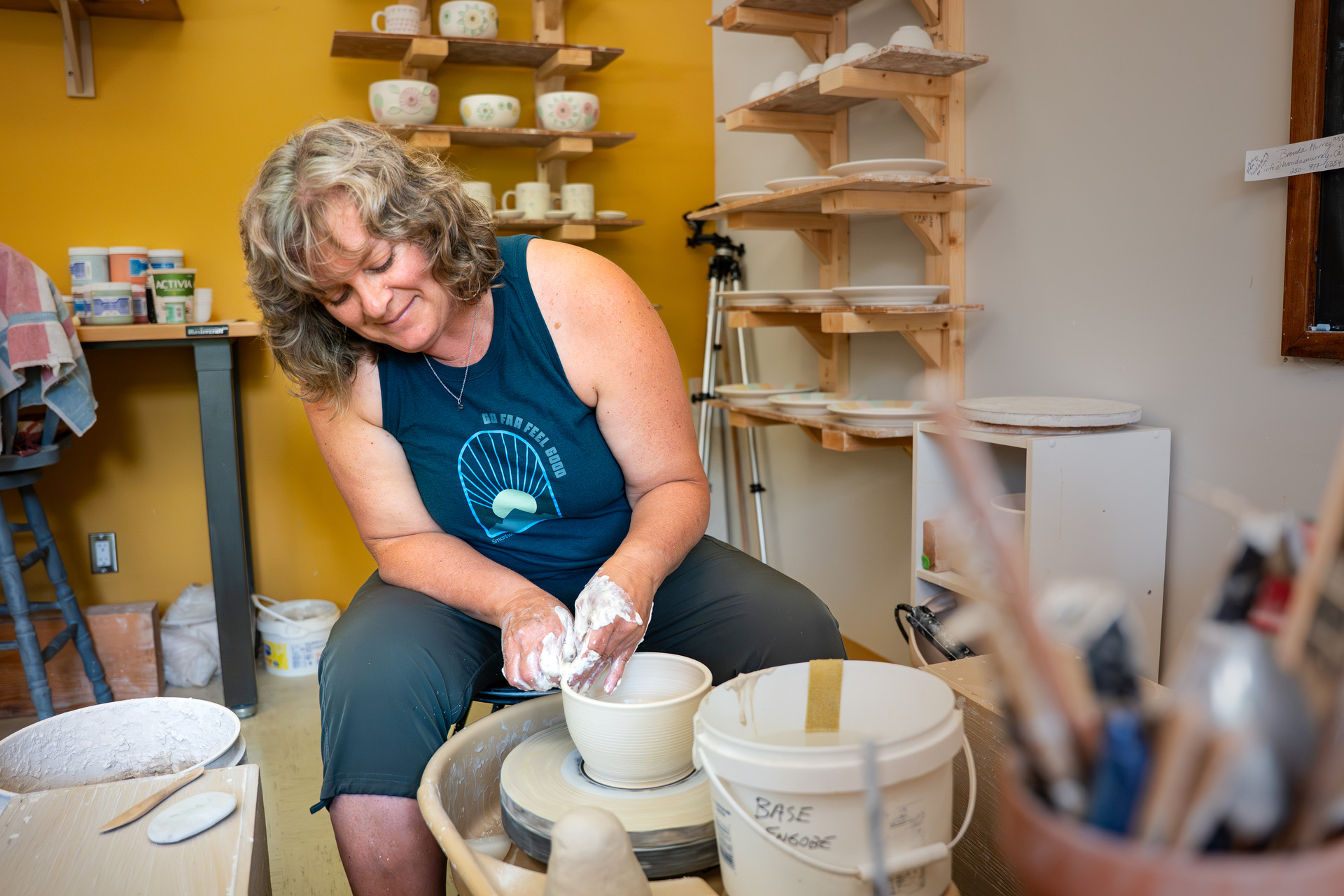
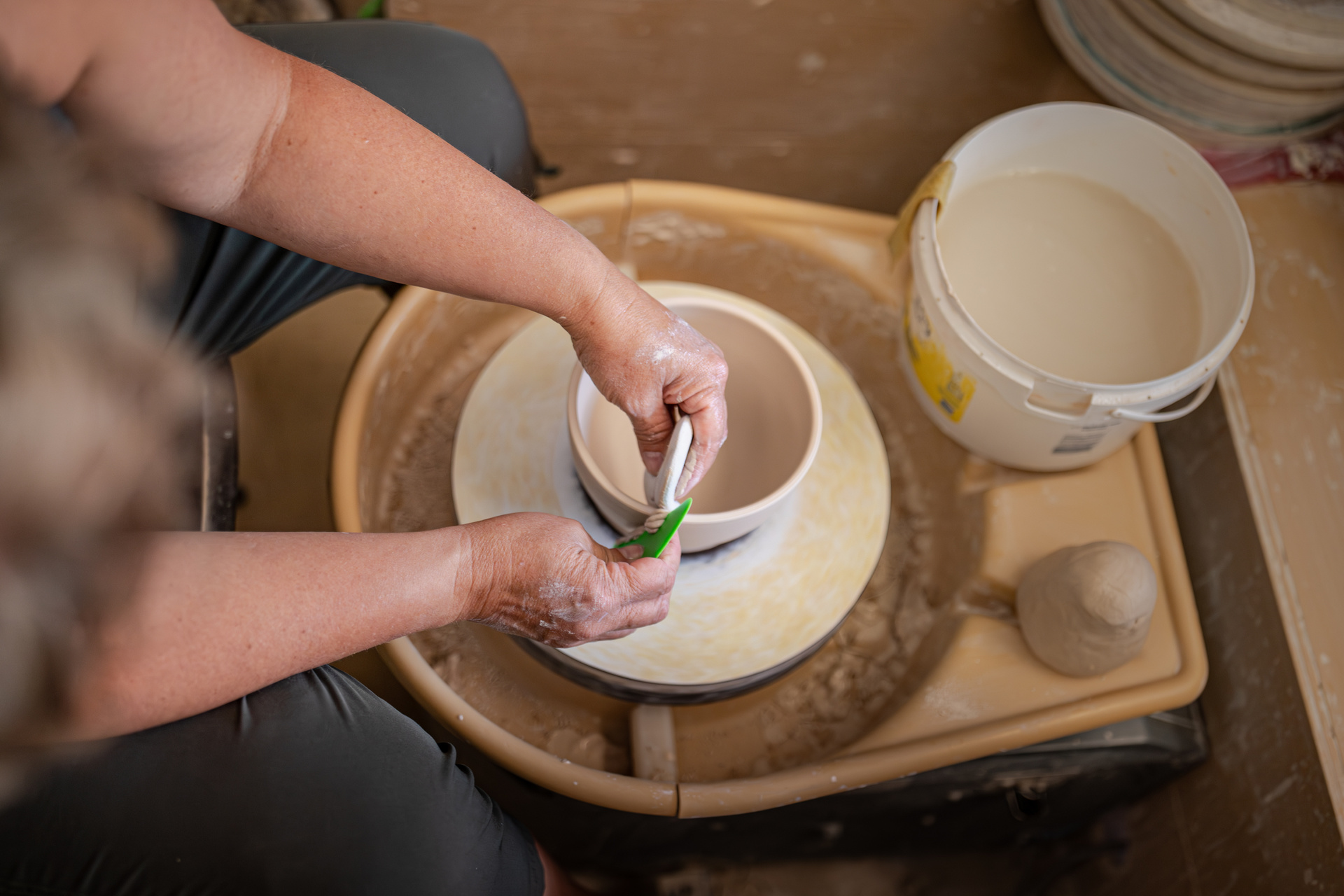
The turning point came with the purchase of their first home in Nanaimo. The house had space for a workshop, where Anita set up a potter’s wheel, bought a small kiln, and started doing ceramics again. By that time, they already had two young children. Work, parenting, and ceramics became increasingly intertwined.
For about nine years, Anita practised pottery and taught until the family had the opportunity to take their next big step. This step was natural and forced at the same time: Neil lost his contract with Shaw Cable, and the couple decided to take the chance to pursue ceramics professionally. It was at that moment that real estate prices in Gold River dropped sharply following the closure of the local mill. For the family, it was an opportunity to return to the community where Neil grew up and where his parents still lived. They purchased a large house, planning to launch a commercial ceramics business there.
The Deep End
Around this time, through his previous work, Neil had access to a Business Futures program. This opened up the opportunity to speak with a woman from Chemainus who owned a complete production setup — including molds, a Ram Press, large 16.5-cubic-foot kilns, a slab roller, and other equipment — a full manufacturing system. After less than an hour of conversation, she asked: “What do you think about buying all my equipment?” She made an offer the Lawrences couldn’t refuse.
It was a massive amount of equipment — so much that even their newly acquired large home proved insufficient. Therefore, to meet production needs (specifically to operate the Ram Press), the Lawrences rented a separate space.
It was a major challenge and a real business trial by fire. Neil, who had previously worked for Shaw Cable, suddenly had to figure out the Ram Press, molds, and ceramic manufacturing. Meanwhile, Anita almost immediately had to go to Calgary for a wholesale gift show that had been pre-booked by the previous business owner. She had never sold ceramics to wholesale buyers — the gallery owners who attended the show — before. Within 24 hours, she had to learn how to do it. Yet that very show effectively launched their new business. They returned from Calgary with orders that needed to be fulfilled.
Along with the equipment, Anita and Neil acquired part of the existing client base. Regular customers kept placing orders, leaving the family with one immediate task: filling those orders. To top it off, they were expecting their fourth child.
“Neil grew up in this small town, while I grew up in a city, so it was an adjustment for me initially, for sure. But we had four kids to raise and a business to run, so we kept busy!
There were so many unique opportunities here for our kids that we may not have been able to afford for them in a larger centre. Neil coached hockey for our boys and I volunteered to help with figure skating for our two girls. We got to travel the Island for sports with our kids, and they also participated in an outdoor program on some really great adventures through the school district,” Anita recalls.
For the next four years, the couple worked in wholesale ceramics. Neil mastered the equipment, worked with the press, and restored molds. In the initial stages, this even helped him gradually develop his own clay skills. However, the production was physically demanding, requiring heavy manual labour, including handling materials and moving large molds. Yet the high volume of work did not yield proportional financial returns. “It was a lot of work and not much reward,” Neil recalls. Eventually, they faced a decision: whether to take the business to the next level by scaling up and hiring staff, or to change direction.
For Anita and Neil, this decision was not just a matter of preference. They began calculating the logistics. Gold River is a small, remote community. Raw materials had to be delivered all the way from Parksville (a two-and-a-half to three-hour drive). But the distance to the clay supplier was not the only issue — transporting finished products added significant costs as well. For a large wholesale business, this was becoming a severe obstacle.
For their location, scaling simply didn’t make economic sense when competing with larger ceramic companies that had better infrastructure, more employees, and far better logistics. It became clear that continuing down the same path risked either burnout or financial loss. So they decided to do something that sometimes runs counter to traditional business logic: not to grow, but to downsize and pivot.
Once again, an opportunity served as the catalyst — one that Anita and Neil decided to seize. New premises became available in their community. But the couple didn't want to just move their workshop there; they wanted to create something extra — an additional reason to draw people to the location.
“Business decisions need to be made based on facts and figures, even when emotions are inevitably involved. Does the business work financially? Can it be sold at a profit? Are the costs and effort justified? Well, sometimes the answer means walking away from something you’ve invested years into,” Anita recalls.
A New Beginning
That’s how the idea of a “small café” emerged, which grew into a restaurant featuring a gallery and a ceramics studio all under one roof: ‘Clayworks Café & Gallery’. Visitors could not only eat, but also explore the gallery and purchase ceramics. Of course, they didn't buy such a specific “café-restaurant-gallery-workshop” ready-made. With the landlord's help, everything had to be built virtually from scratch. And the customers embraced it.
“People were so pleased with the restaurant and genuinely happy to have something like that in their community, in our community. Bringing a business like that to a small town, and seeing the appreciation from locals and visitors alike — it was extremely rewarding to have all of that together with the gallery,” Anita recalls.
Clayworks Café & Gallery became one of those places where different parts of small-town life naturally came together. You could stop in not only for breakfast, homemade baking, their signature veggie burger, or a cup of coffee, but also to see Anita and Neil’s ceramics and the work of other Gold River artists. At the same time, Anita worked with the Gold River Chamber of Commerce to promote local businesses and tourism. And when the town’s Visitor Information Centre remained closed during the summer of 2020, Anita and Neil even made room in the café for visitor information.
Running such a business was no easy feat, but it was an invaluable experience for the family. In particular, Neil and Anita’s children grew up working in the restaurant, gaining hands-on experience that helped shape their work ethic.
“Our kids decided to leave, for education, relationships and other opportunities. But they like coming home, the summers are beautiful here and the rivers are crystal clear for swimming.
They have all chosen paths that are new to us, although they are all creatives in some way, and as they age they may discover clay at some point or really dive into art in some way — who knows?” Anita says.
When Less Is More
The restaurant and gallery operated successfully for years, but Anita and Neil gradually realized that dedicating themselves fully to both the restaurant and ceramics was extremely challenging. One venture inevitably consumed time and energy from the other. So they decided to downsize once again.
In 2020, during the COVID-19 pandemic, they sold the restaurant. The “big little café” had operated for about 13 years. It was time to move on — forward toward their dream, back to their roots.
After several decades of living and doing business together, Anita and Neil learned one key lesson: change doesn’t necessarily mean failure. Sometimes it just means you have a clearer understanding of what you truly want. And this decision gave them the opportunity to return to what they actually wanted to do most.
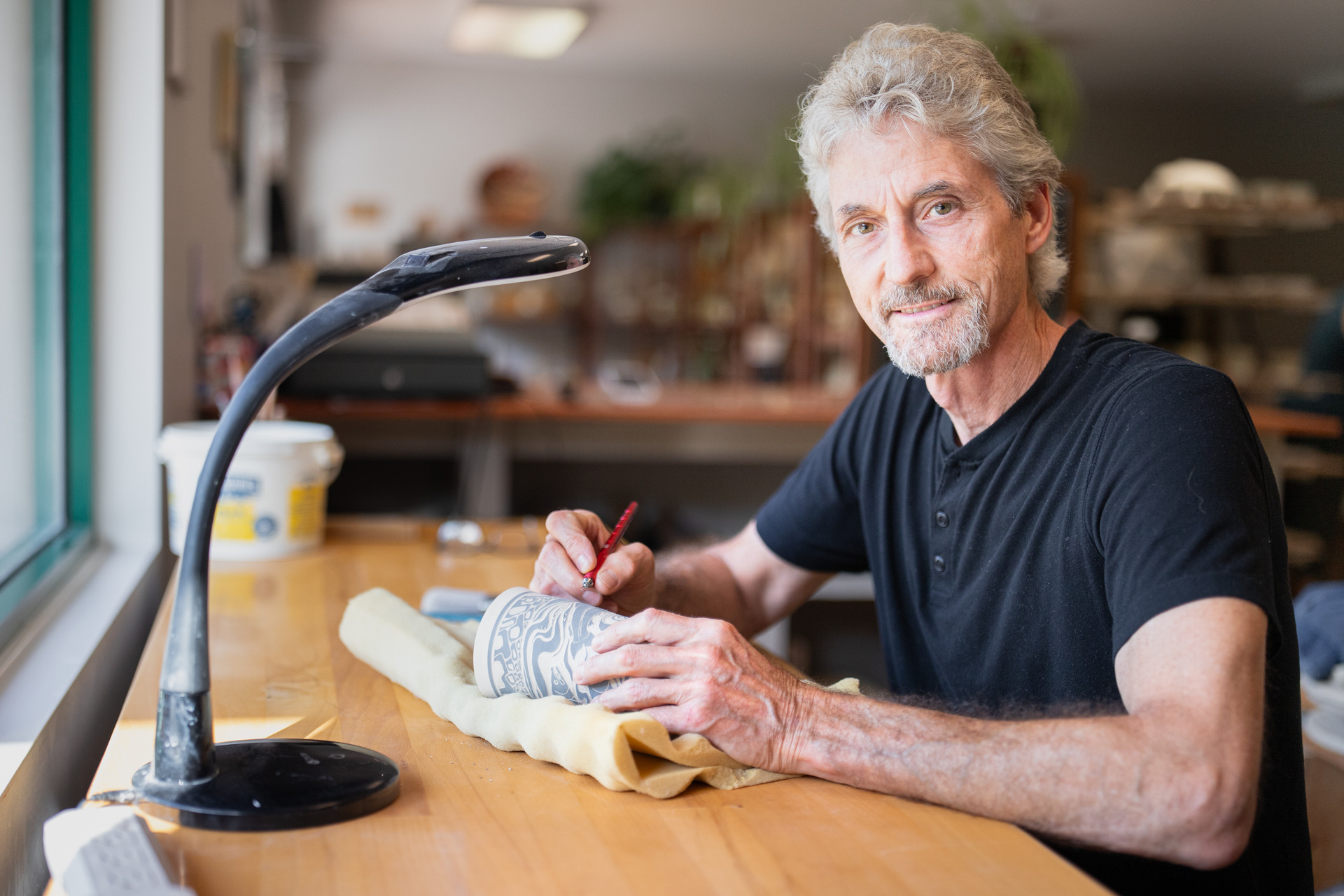
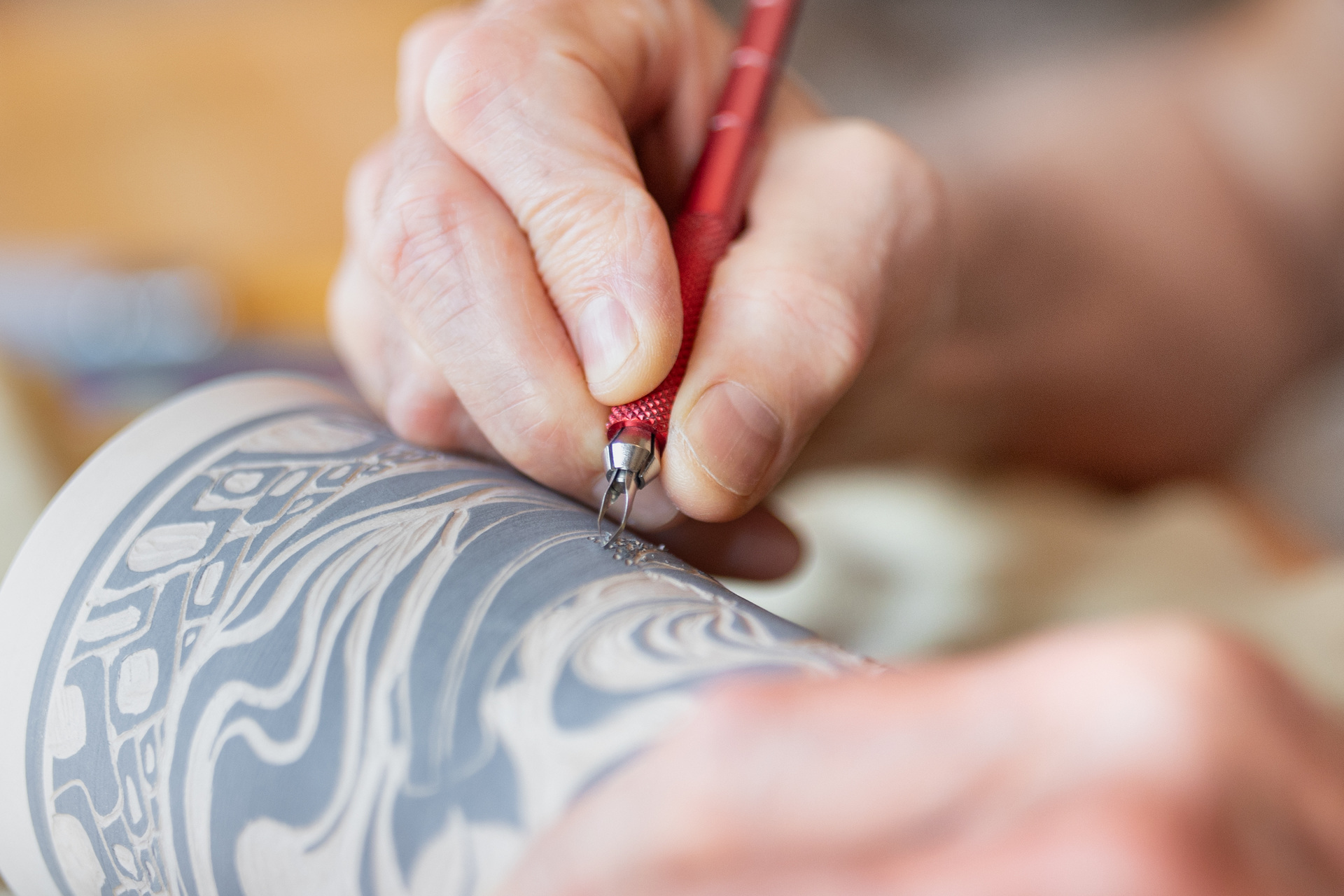
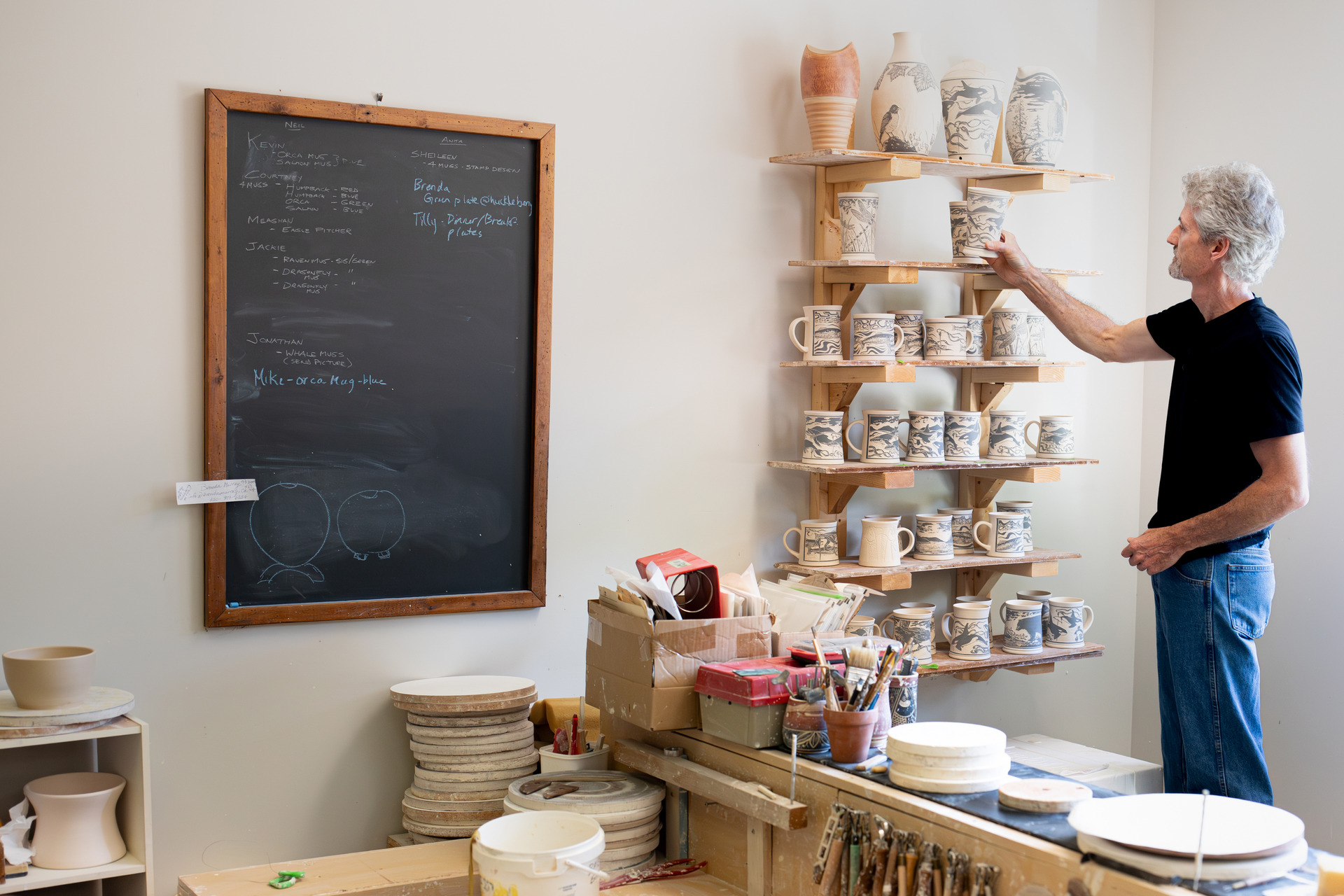
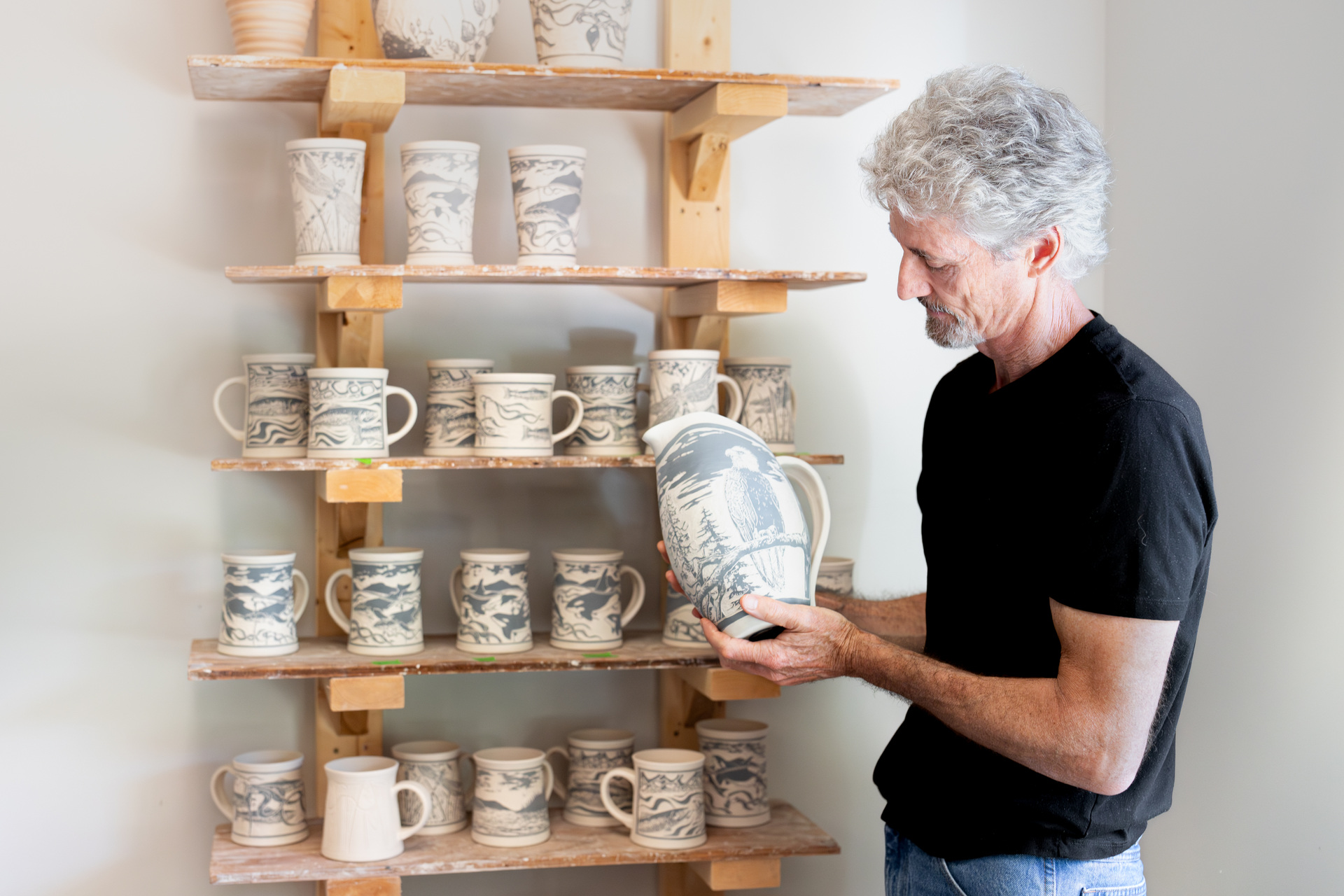
Even during the period of working with press-molded ceramics, Neil began searching for his own artistic style. He had always loved to draw. When he discovered the sgraffito technique, his two passions — drawing and ceramics — finally merged. Neil began creating decorative pieces using his own photographs as inspiration. Birds, bears, and other wildlife came to hold a special place in his work.
So when the Lawrences moved away from heavy production equipment, Neil gained the opportunity to spend more time at the potter’s wheel, focusing on form and decoration. Selling off the industrial equipment became a gateway back to the creative element that wholesale production had lacked. It was the right choice: a passion that had threatened to become production work became a craft again that drew him to ceramics in the first place. And it worked.
“It’s that lightbulb moment when you think: okay, I’ve stumbled onto something special. I love what I’m doing. I love what they see. I’m selling it. And that’s perfect — you couldn’t ask for better,” Neil recalls.
“Just to experiment, make lots of work, even if it doesn't sell (it eventually does), and understand the medium by making loads of work — this makes you a better potter. By creating lots of opportunities for yourself to learn and grow, you become a more well-rounded and interesting person who can help others,” Anita says.
Two at the Wheel
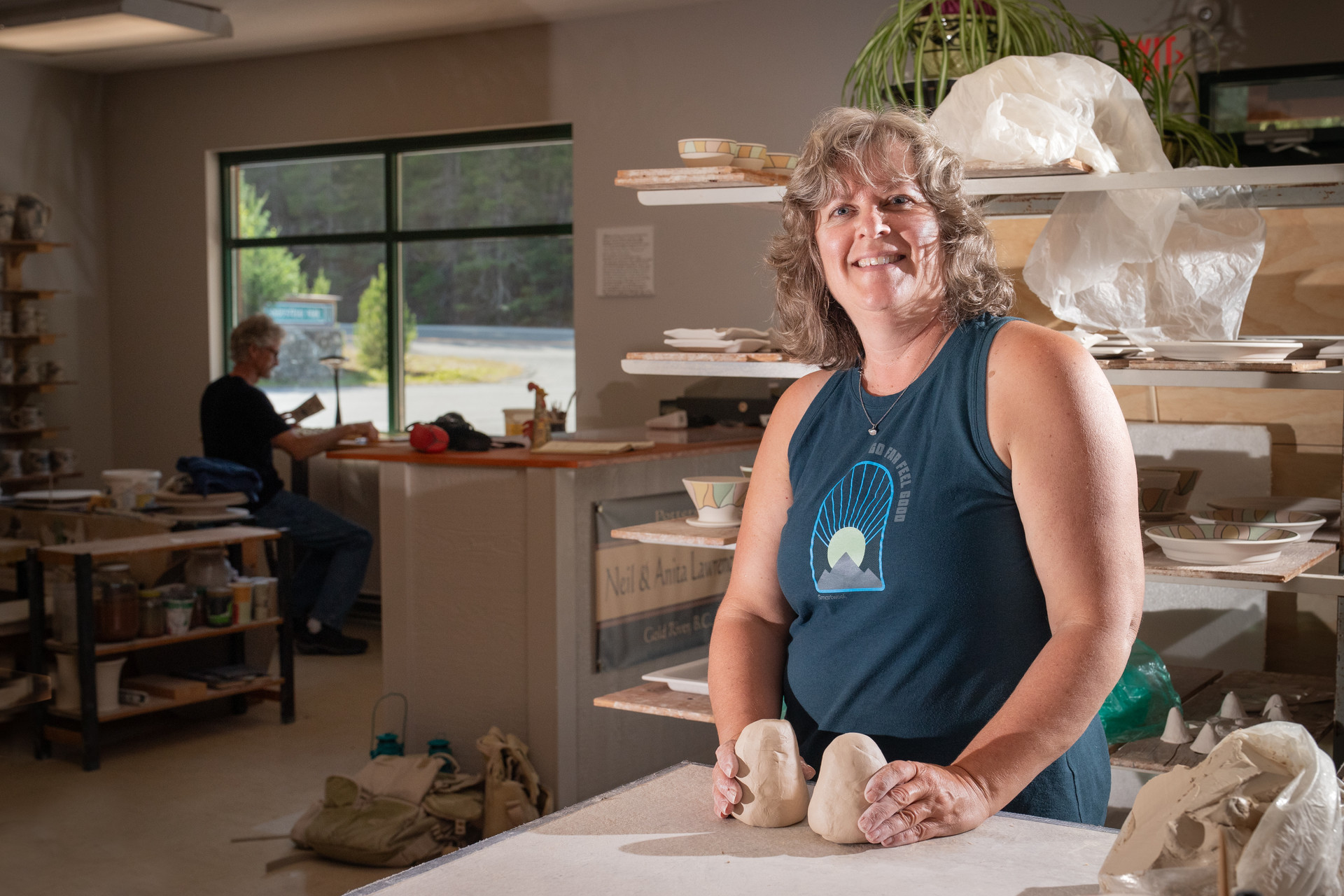
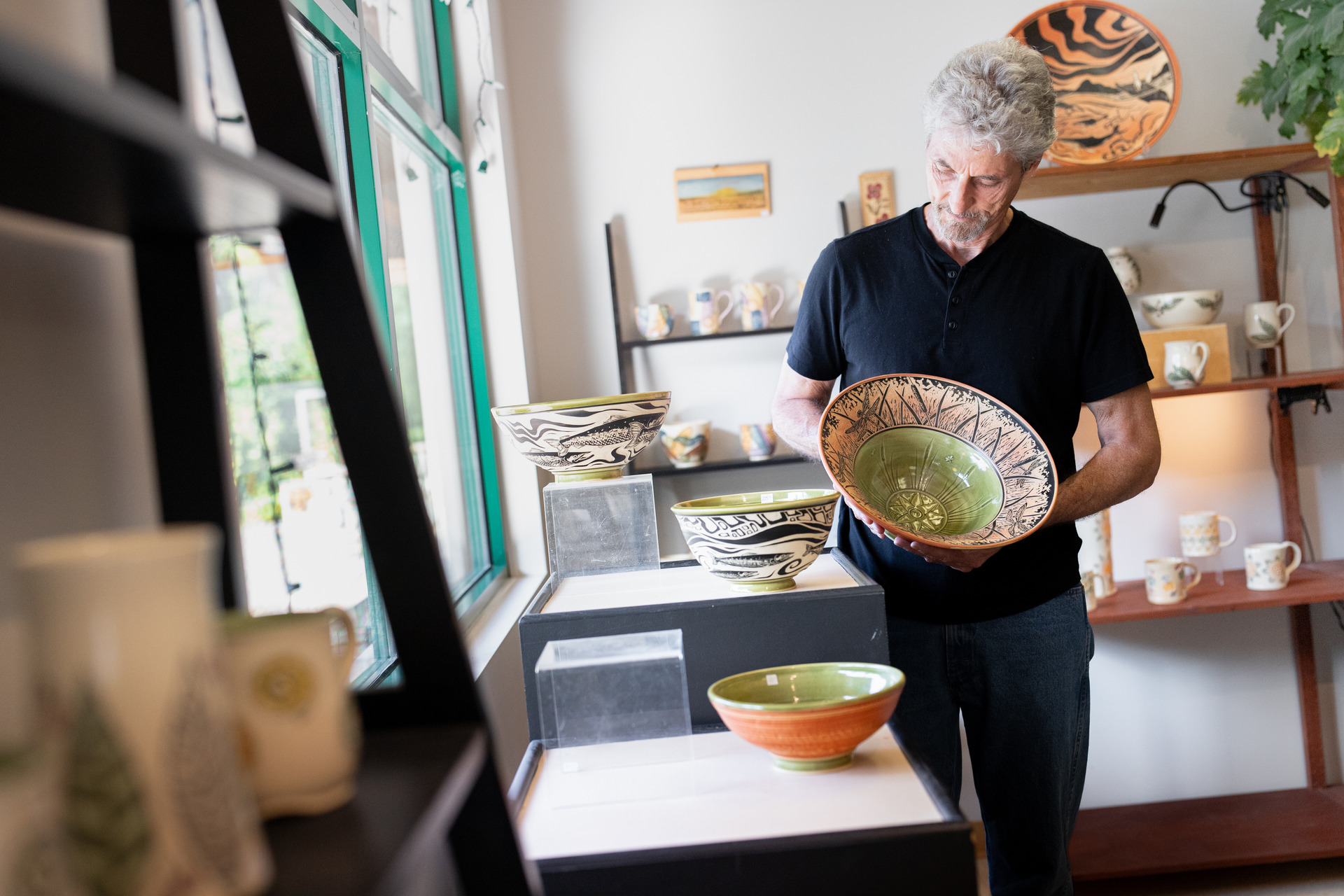
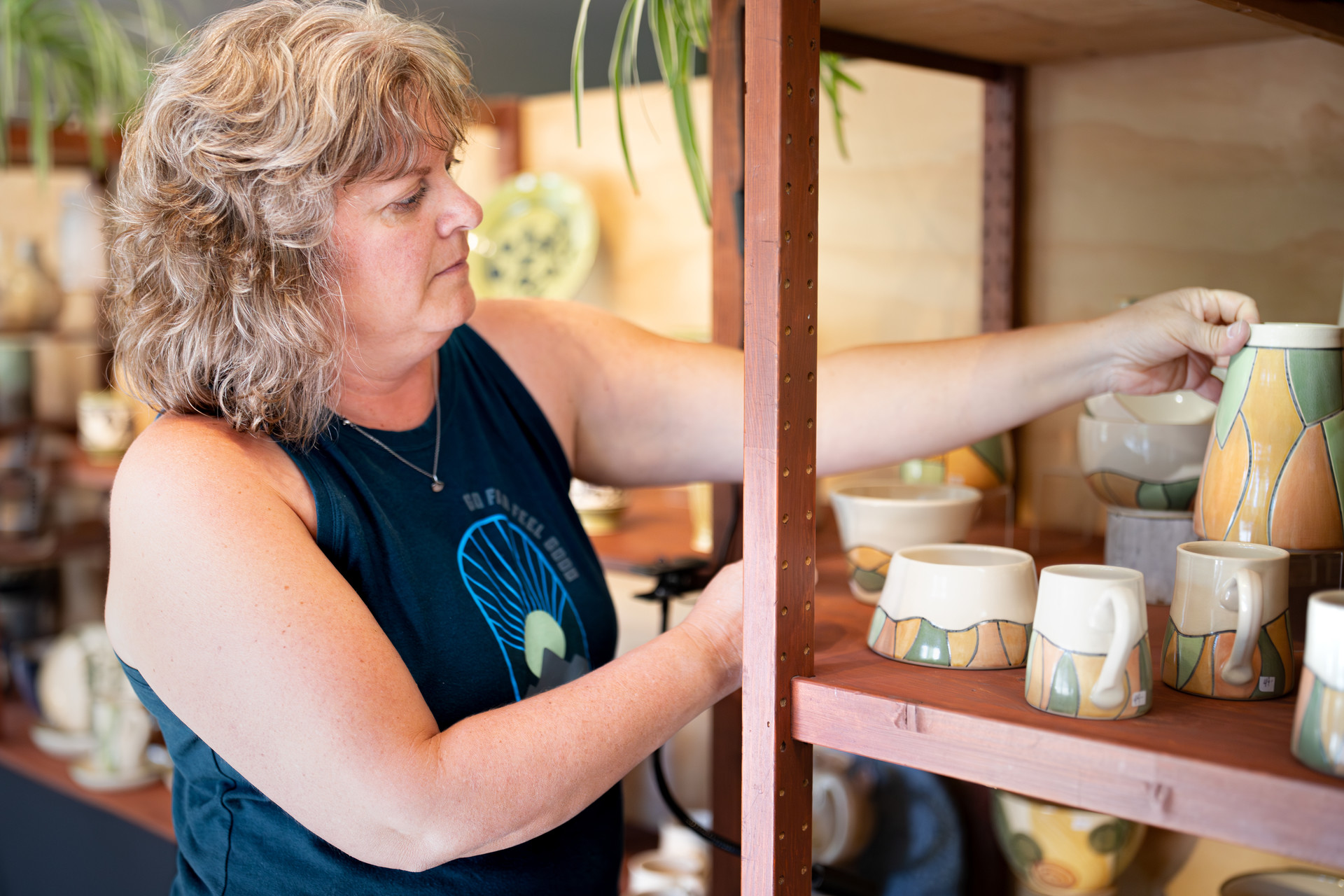
Today, their space is much simpler: their own gallery, a studio, three potter’s wheels, a slab roller — and just the two of them. No heavy manufacturing equipment. No restaurant. No big team. And according to Anita and Neil, it works.
“As we’re both creative and have our own unique styles, I handle the financial reporting, show registrations, and teaching. Neil does the heavy lifting — bringing in clay and dry materials, testing and mixing glazes, and keeping up with the high demand for his work,” Anita explains.
While Gold River’s location poses challenges for large-scale operations, it offers distinct advantages for a small creative enterprise. In the summer, the region attracts many tourists who come to explore Nootka Sound, go kayaking, hiking, and caving. The local tourist season runs roughly from late May to late September. During this period, the gallery sees the most visitors. In other months, they adapt their approach: travelling to Christmas markets and themed shows across Vancouver Island, conducting workshops, or simply spending more time in the studio crafting new pieces. This seasonal rhythm suits them well.
“The drive into Gold River seemed remote to us at the beginning, but it is nothing now to drive the hour to Campbell River to stock up on supplies or visit the kids, or to travel the Island for shows,” Anita says.
The First 40 Years
Today, Anita and Neil have what they lacked during the years of heavy manufacturing and the restaurant business: space to create and a more balanced way of life. It is here, in Gold River, that they found their rhythm.
Their story is not one of endless growth or a pursuit of bigger numbers. If anything, it is a story of two people who repeatedly reshaped their lives to make room for what mattered most.
Their journey with clay began a long time ago, and the road that brought them here was anything but straight. They started with art, tried other careers, found their way back to ceramics, built a wholesale business, opened a restaurant, and eventually returned to a small studio of their own.
But this is not the end of their story — just the first 40 years together on the road.


