Fri. 3rd Apr. 2026, 2:45 pm

The spring equinox shifts the focus of daily interests toward juicy, smoky BBQ and seasonal family and friends’ picnics. Many residents and visitors to the south of Vancouver Island search for places where this can be done legally and safely. To find this information, choose the ideal location, learn in advance about required permits and fees, bans and restrictions, and reservation needs — a considerable amount of time is required. In this article, we offer a comprehensive overview of grilling and BBQ locations in the south of Vancouver Island, with detailed descriptions of these places, their advantages and highlights, as well as restrictions, possible fees, and reservations. We hope this will be useful to you.
But first, a few words about safety. Fire is always a potential hazard — even a small spark can grow into a massive fire and cause enormous damage and tremendous losses to property, nature, and health! Before lighting a fire of any size, always check whether there are bans on open fire in your region established by the BC Wildfire Service. Information about current restrictions for the “Coastal Fire Centre” jurisdiction (which includes Vancouver Island) can be found online at www2.gov.bc.ca or verified on the interactive map.
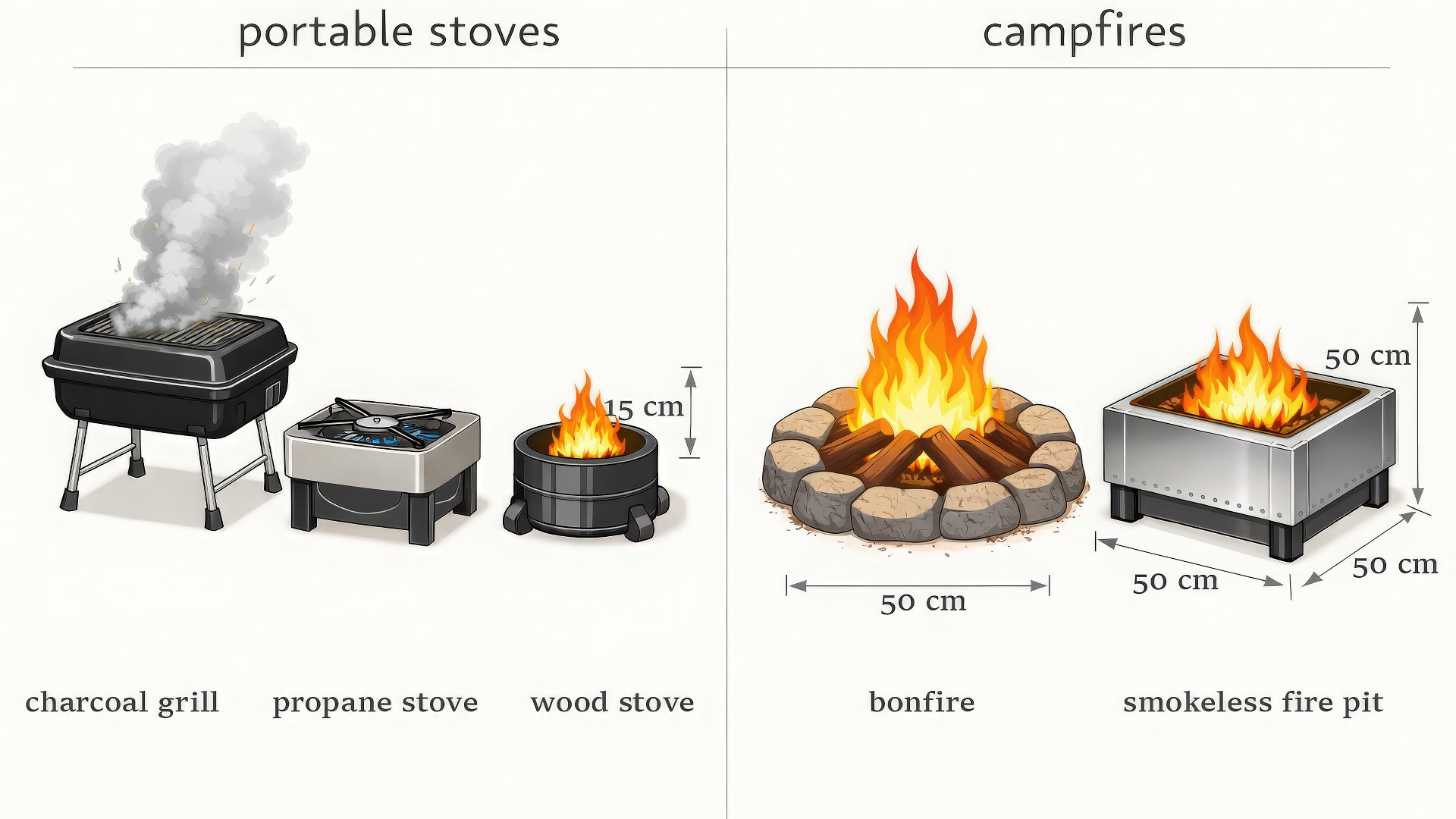
In this article, we will omit the review of Category 2 fires (up to 2 metres in height and 3 metres in width) and Category 3 fires (multiple Category 2 fires at the same time), Category 4 fires (controlled burns), special permits, and burn barrels. For cooking, private recreational, and ceremonial purposes, portable outdoor stoves (with a flame height up to 15 cm) and Category 1 campfires (half a metre wide and half a metre high) are sufficient.
In all Regional Parks and Community Parks of the CRD, any source of fire (BBQ, stove, fire pit) is permitted only: in specially equipped locations, or in areas marked with signs (designated areas or facilities), or with a permit. It is strictly prohibited to leave a grill or stove unattended. Park administration may also prohibit any devices at any time.
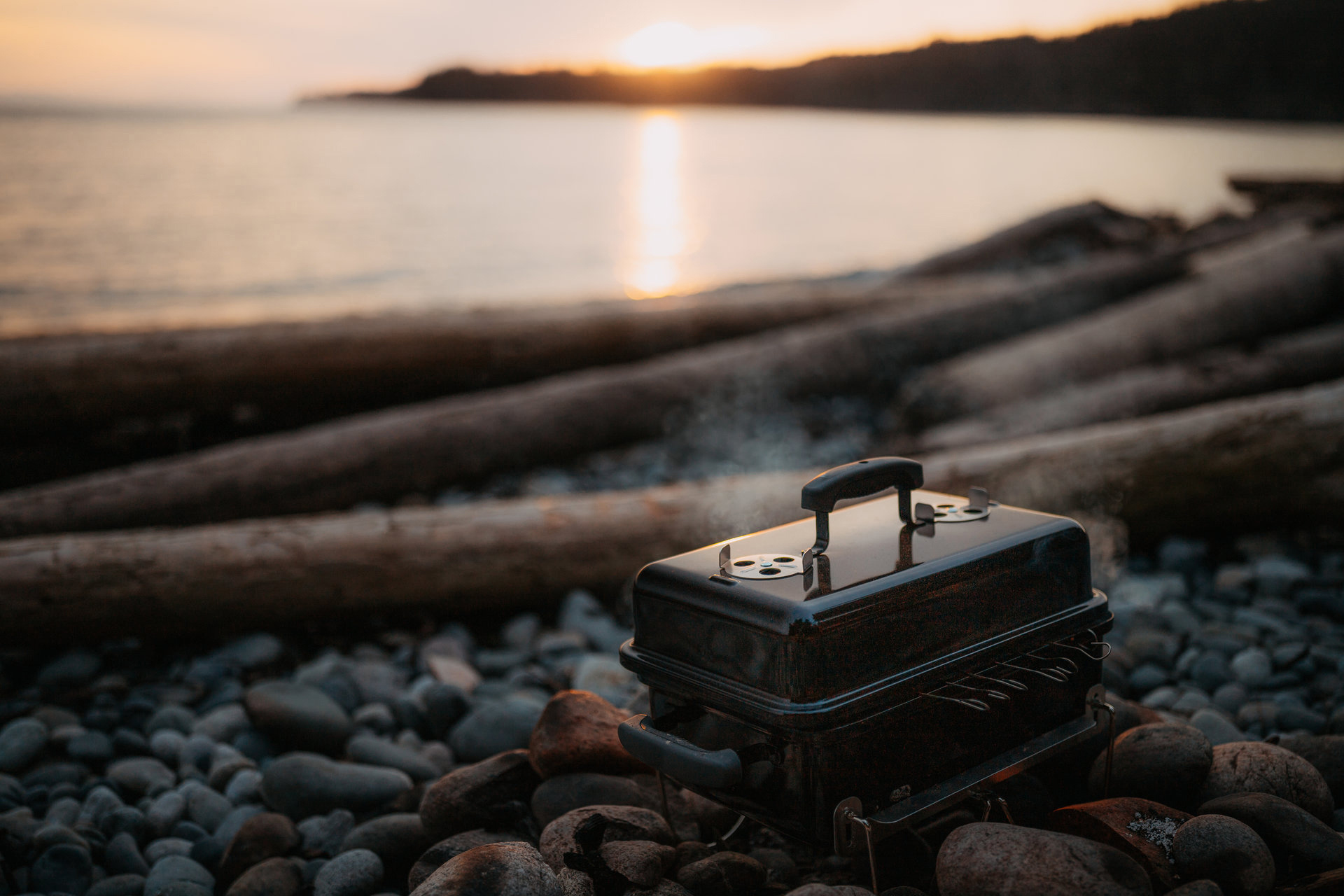
Therefore, portable outdoor stoves with a flame up to 15 cm in height may be used outdoors for cooking, heating, or creating atmosphere, burning charcoal briquettes, gas (propane), or liquid fuel. This category also includes portable barbecues and pizza ovens. During a Category 1 campfire ban, only such (Canadian Standards Association or Underwriters Laboratories of Canada certified) outdoor stoves may be used. Sometimes, during extreme fire danger and in protected natural areas, restrictions may extend even to such small and portable devices.
Remember, a small (0.5 × 0.5 m) bonfire is usually permitted only in a fire ring and only where this is explicitly allowed. Most legal options for such a fire are fire rings in campgrounds, specially permitted beach fires (which occur very rarely), and private property (if local bylaws allow it).
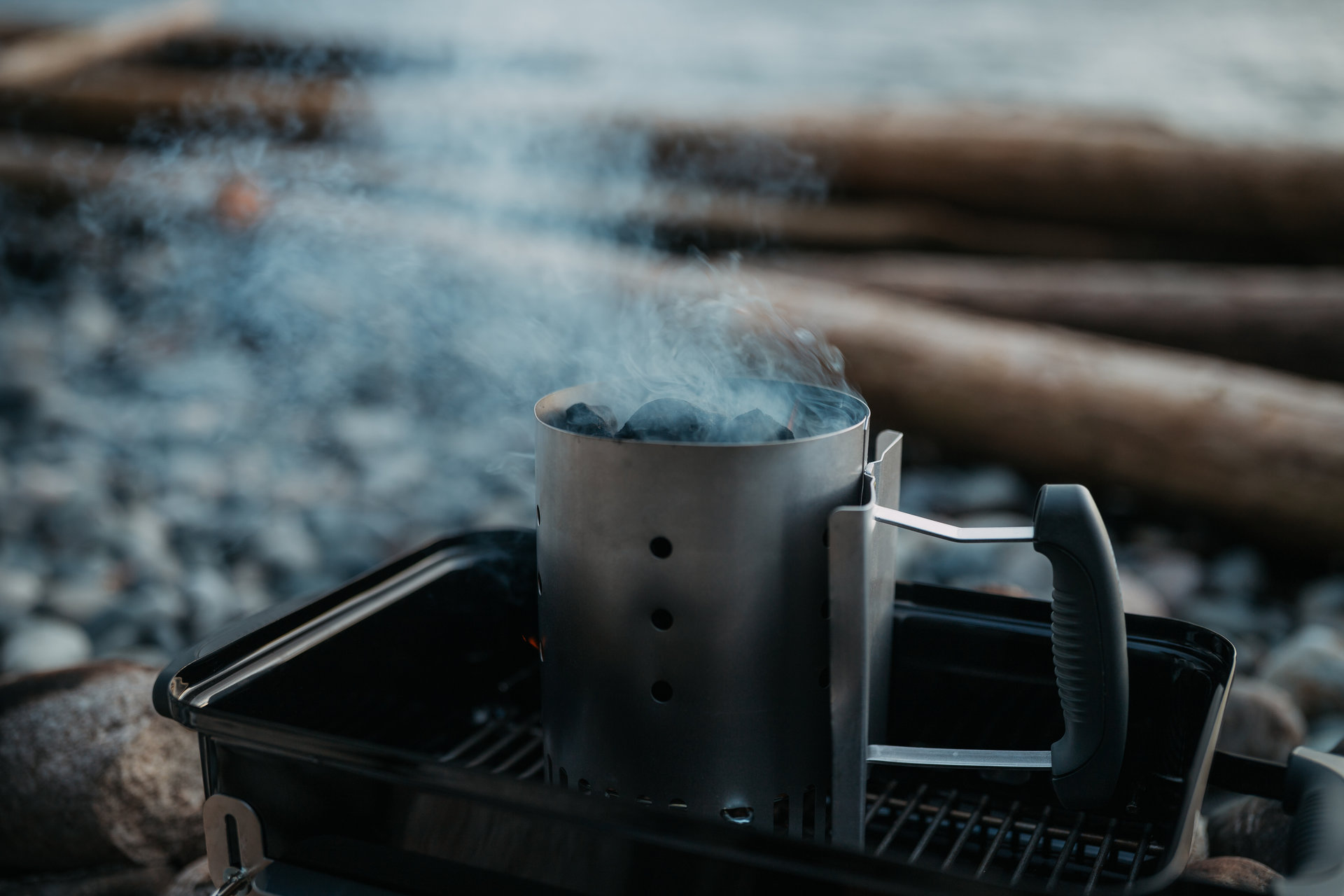
If the circumstances of place and time are favourable for you, and you have the opportunity and desire to grill with a portable outdoor stove or barbecue, remember to follow
legislative rules and requirements:
• Keep at least one hand tool for firefighting (shovel, axe, fire extinguisher) or 8 litres of water available to extinguish the fire.
• Ignite a fire in an outdoor stove only under safe conditions: ensure the device is placed on a level, non-combustible surface, at a safe distance from tent walls, shrubs, trees, and low-hanging branches — create a fuel break by removing any flammable materials (down to bare earth) within at least one metre of the device.
• If you are lighting not a stove but a campfire, additionally use a stone ring, fire pit, or other non-combustible barrier around the fire to prevent its spread.
• If the fire spreads beyond the stove or fire ring, immediately extinguish the flare-up (keep the fire size no larger than 0.5 metres in height and 0.5 metres in width).
• Never leave a fire unattended for any period of time. Before leaving the area (or going to sleep), ensure the fire is completely extinguished.
• Never discard hot cooling materials. Before disposal, extinguish the fire with a large amount of water, stir the ashes, and then pour more water until the ashes are cool to the touch.
• In the event of a fire, immediately notify the appropriate services.
• Winter / early spring (≈ October – April). The most “flexible” period. Typically permitted: campfires, charcoal / wood, outdoor stoves. This is the main season for: backyard burning, large fires, site clearing.
• Spring (≈ March – May). Transitional period: open burning (with a permit) is still allowed in some municipalities, but certain restrictions may begin to appear.
• Start of fire season (late May). Approximately from May 30, bans on Category 2 and 3 fires (large fires and debris burning) appear. Only small campfires remain permitted.
• Peak summer (July – August). Around July 17 (± a few days), a full ban even on campfires usually appears. This means prohibition of campfires, wood / charcoal, and sometimes even propane. This is the strictest period.
• Autumn (September – October). Typically from mid-September, bans begin to be partially lifted — by October 31 most bans are removed. Campfires are restored first, but restrictions on large fires may still remain.
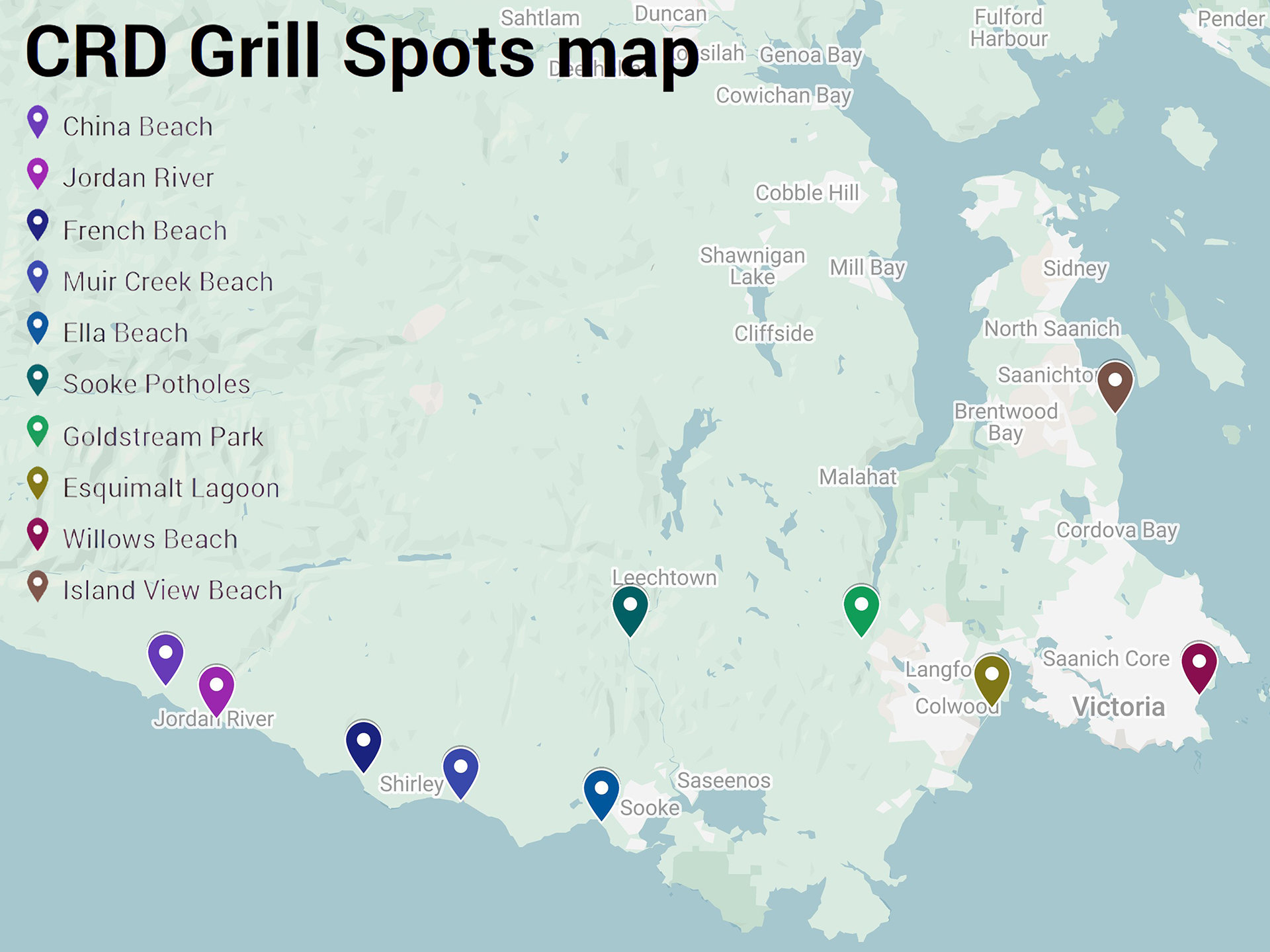
CRD Grill Spots (where you can grill on south of Vancouver Island):
1. Juan de Fuca Provincial Park. China Beach Campground Campfires are allowed at China Beach Campground, and a fire ring is provided at each campsite. Please minimize the use of fire. Buy firewood locally to avoid introducing invasive species. Firewood is sold in the park. For details, contact the park operator. Juan de Fuca Marine Trail Small campfires are allowed below the high-tide mark on beaches along the Juan de Fuca Marine Trail. Use driftwood to build your fire. Do not gather wood from anywhere else in the park, as this is an offence under the Park Act.  Limited access (map)
  Juan de Fuca Marine Trail, BC Highway 14 (West Coast), Juan de Fuca, CRD
  www.bcparks.ca/juan-de-fuca-park/#facilities
2. Jordan River Jordan River Regional Park and Campground, Juan de Fuca, CRD www.crd.ca/parks-recreation/find-park-or-trail/jordan-river-regional-park
3. French Beach Provincial Park French Beach Provincial Park, West Coast Rd, Shirley, Juan de Fuca, CRD www.bcparks.ca/french-beach-park/
4. Muir Creek Beach Muir Creek Park, Hw 14, Juan de Fuca, CRD www.visitsooke.ca/main-directory/muir-creek-beach
5. Ella Beach Ella Rd, Sooke, CRD www.visitsooke.ca/main-directory/ella-beach
6. Sooke Potholes Provincial Park. Spring Salmon Place open seasonally from May to September Sooke Potholes Campground, Sooke River Road, Sooke, CRD www.crd.ca/parks-recreation/find-park-or-trail/sooke-potholes-regional-park
7. Goldstream Provincial Park Limited access Goldstream Park Campground, 2740 Golden Gate Rd, Langford, CRD www.bcparks.ca/goldstream-park/
8. Esquimalt Lagoon Migratory Bird Sanctuary Picnic Area 2903 Ocean Blvd, Colwood, CRD www.colwood.ca/discover-colwood/points-of-interest/colwood-waterfront-esquimalt-lagoon
9. Willows Beach Regional Park Willows Park & Beach, Dalhousie Street / Beach Drive / Esplanade, Oak Bay, CRD www.oakbay.ca/parks-recreation/parks/parks-listing/willows-park/
10. Island View Beach open seasonally from May to October 3215 Island View Rd, Saanichton, Central Saanich, CRD www.crd.ca/parks-recreation/find-park-or-trail/island-view-beach-regional-park
Marinade (for 1 kg of meat):
• onion (3 pcs)
• olive oil (1 tsp)
• soy sauce (3 tbsp)
• honey (2 tbsp)
• ginger (1 tsp)
• garlic (2 cloves)
• mineral water (1.5 cups)
• juice of one lemon
• paprika (1 tbsp)
• salt (2 tbsp)
• black pepper (1–2 tsp)
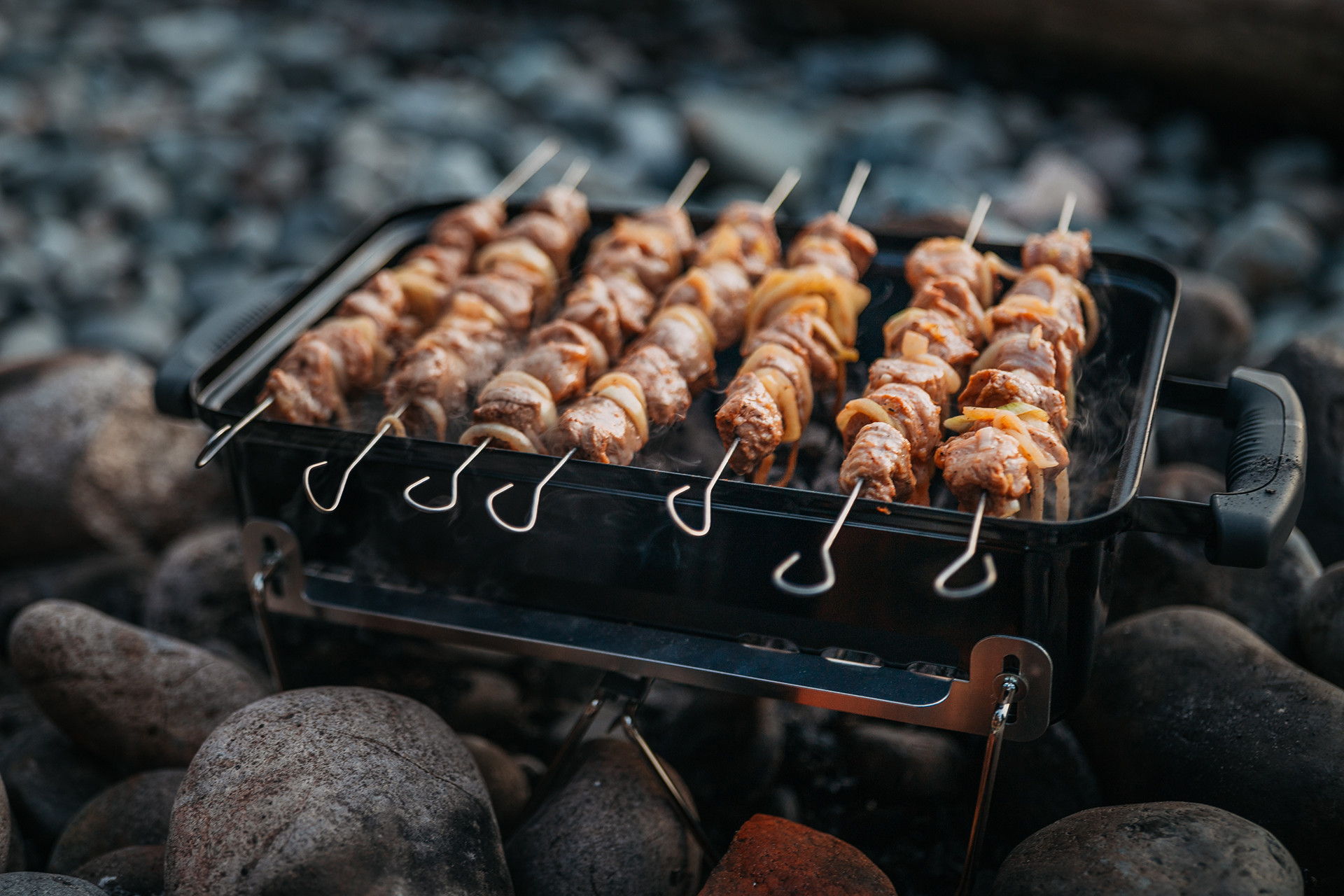
When you start grilling and light the coals, while they heat up, prepare the meat. Thread the marinated pieces onto skewers, alternating with onion slices. Grill over hot coals, turning regularly so every piece cooks evenly and gets a beautiful char. Just before taking them off the fire, drizzle a bit of the leftover marinade over the skewers for an extra burst of flavor. Serve hot.
Enjoy, and savor every bite!